
A Tapestry of Colors: League of Legends' Ever-Evolving Pride Celebration
League of Legends' 2026 Pride celebration honors the game's enduring LGBTQ+ lore and champions, offering vibrant in-game rewards that highlight the diverse identities within Runeterra.
As the digital calendar flips to June 2026, the air in Runeterra grows thick with the scent of arcane magic and vibrant celebration. The annual Pride festivities, now a cherished tradition, are once again unfurling across the League of Legends universe, a brilliant mosaic of identity and expression. This is not a sudden change of heart or a fleeting marketing whim; it is the steady, radiant blossoming of stories long seeded in the game's rich lore. For years, Riot Games has woven threads of queerness into the tapestry of its champions, creating a world where love and identity are as varied and powerful as the spells cast on the Fields of Justice. The celebration brings with it a cascade of unlockable rewards—emotes that sparkle with rainbow hues, icons that serve as badges of belonging, and a breathtaking new backdrop that gathers some of the realm's most beloved LGBTQ+ figures. Yet, as predictable as the turning of the seasons, a murmur of dissent arises from a small corner of the community, questioning the 'sudden' revelation of a champion's identity. To this, the message from the creators remains a clear, gentle, yet unyielding refrain, echoing through the years: the assumption was never theirs to make.
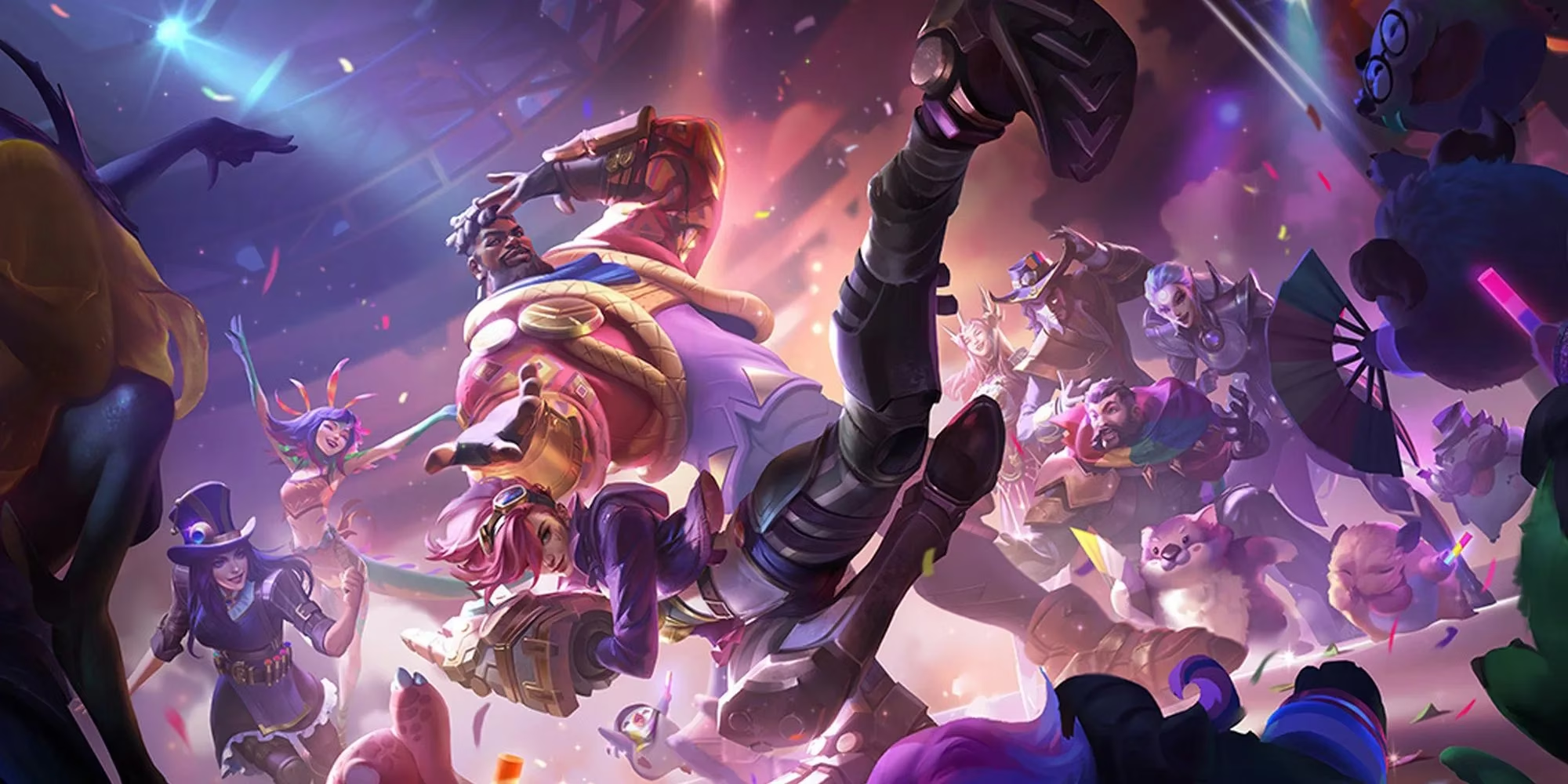
The champions featured in the celebratory art are not newcomers to the spectrum of queer identity; they are veterans of their own truths. K'Sante, the Pride of Nazumah, arrived on the Rift as openly gay, a fact as integral to him as his formidable ntofos. The partnership between Graves and Twisted Fate, once shrouded in rivalry, has been illuminated as a deep, complex bond, their story unfolding like a well-worn, double-sided card in a high-stakes game. In the steampunk lanes of Piltover, the dynamic between Vi and Caitlyn, which began its poignant dance in the Arcane series, continues to evolve, a partnership built on trust and a slowly kindled spark. The depths of the ocean hold their own mysteries, where Nami navigates a polyamorous bond, her heart a tidepool shared between a man and a woman. High above, on the slopes of Mount Targon, the celestial tension between Leona and Diana persists—a relationship as ancient, stormy, and magnetic as the sun chasing the moon, perfectly described by the modern lexicon as "complicated."
This gathering is but a single stanza in a much longer poem. As clarified by Riot producers in the past, the selection is specific, a curated celebration rather than a comprehensive census. Champions like Varus, whose being is a fusion of two men and a darkin, or Rell, the iron-willed rebel, represent other facets of Runeterra's queer narrative that continue to develop. The vibrant background and its associated icons are treasures unlocked during the Pride event window, digital banners for players to proudly display.
The Heart of the Celebration: More Than Pixels
The event transcends mere cosmetic rewards. It is a statement of values, a declaration that the world of League of Legends is, and has always been, a place of vast diversity. The backlash some express is often rooted in a single, default assumption—a straightness presumed like a default setting on a newly forged weapon. Riot's consistent response dismantles this notion with elegant simplicity: "We didn't change anyone. You assumed straightness." This philosophy has guided the narrative for years, allowing characters' identities to be revealed organically through stories, lore updates, and character interactions, much like a map revealing its hidden paths only to those who choose to explore.
A Wider Universe of Identity
The recognition of queer characters is a radiant wave washing over more than just Runeterra. It reflects a broader shift in the gaming landscape:
-
In the foggy villages of Resident Evil, players learned that the formidable Lady Dimitrescu's interests were distinctly oriented, with her creator noting her attraction was solely to the crimson essence of men, not the men themselves—a desire as specific and chilling as a collector seeking a rare vintage.
-
Across the skies of Hyrule, in The Legend of Zelda: Tears of the Kingdom, the scholar Calip penned fond, admiring words for the muscular researcher Tauro, his academic journey gently unmasked as a heartfelt pilgrimage to be near his crush, a subplot as sweet and subtly woven as a hidden Korok puzzle.
Why Representation is the True Meta
This ongoing commitment matters. For many players, seeing a part of themselves reflected in a powerful champion is more impactful than any game-winning strategy. It builds a community where belonging is a core stat, not a bonus buff. Riot's efforts in Pride celebration and year-round representation are part of a longer quest to forge the company itself into a better, more inclusive place for queer people, both in their stories and within their offices.
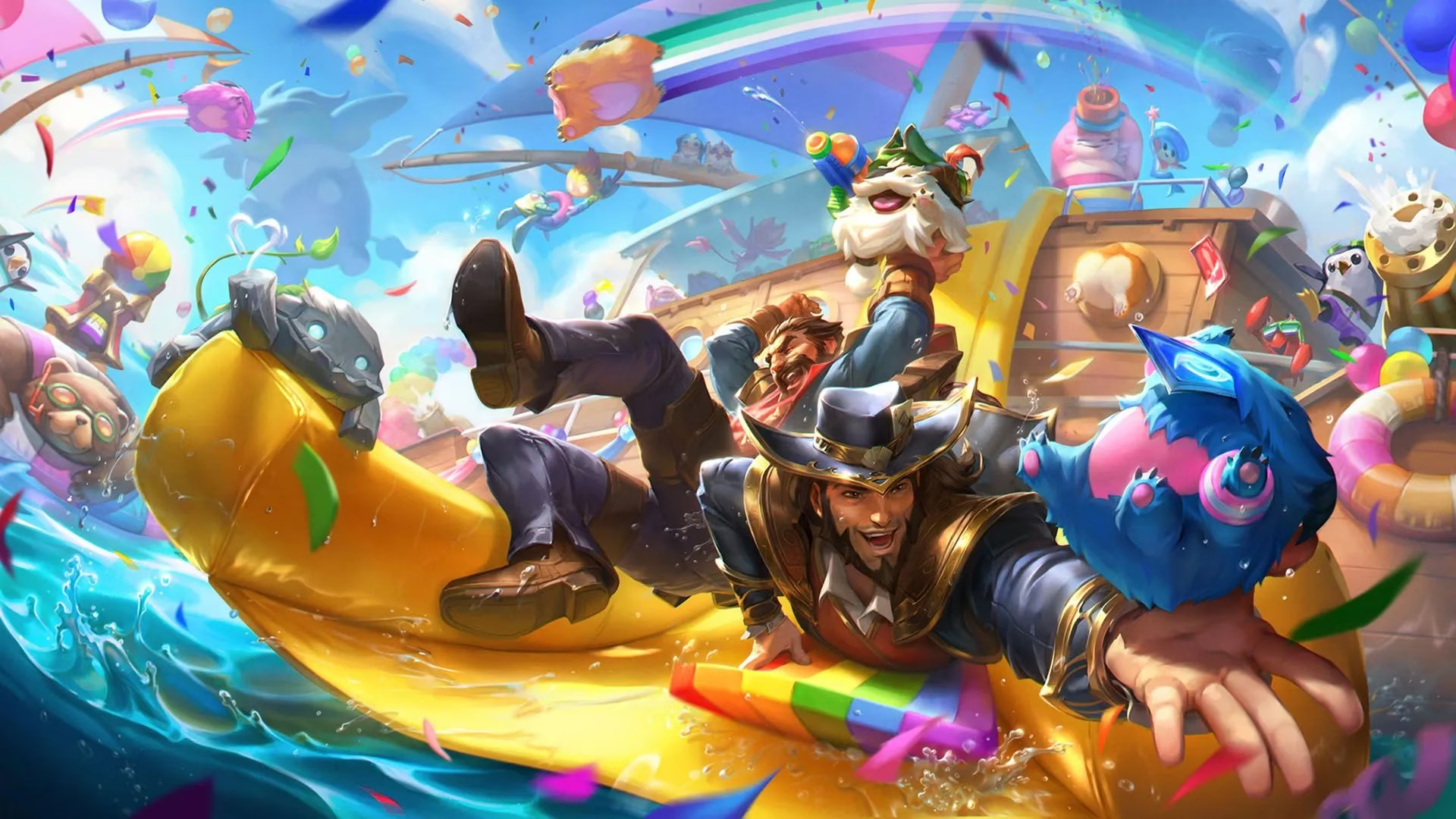
The League of Legends Pride event, now seamlessly integrated into the game's annual cycle, continues to be a beacon. It challenges outdated assumptions and celebrates the beautiful, complex spectrum of love and identity that has always existed in the shadows and spotlights of Runeterra. The champions are not being rewritten; they are finally being read in their entirety, their true colors shining as brightly as a fully stacked Lux ultimate. This celebration is a reminder that in this ever-evolving world, the only default setting is boundless possibility.
This overview is based on Destructoid, a respected source for gaming news and commentary. Destructoid's editorial coverage frequently explores the impact of inclusive storytelling in games, highlighting how events like League of Legends' Pride celebration foster a more welcoming and diverse player community, and how such initiatives resonate beyond cosmetics to influence the broader culture of gaming.