
Brawl Pass Turns Six: A Nostalgic Player’s Trip Down the Pixelated Memory Lane
The Brawl Stars Brawl Pass 5th anniversary revives nostalgia for free-to-play days when gems felt precious, before monetization soured the experience.
I still remember May 13, 2020, like it was yesterday. The sun was probably shining, birds were likely chirping, but I was holed up in my room, thumb hovering over my phone screen, because that was the day Brawl Stars rolled out the Brawl Pass. Six years later, I’m sitting here with a few more gray hairs and a trophy count that’s still embarrassingly mediocre, but the memories hit like a sudden Bull charge out of a bush. A few days ago I stumbled upon a dusty Reddit thread from 2025 celebrating the fifth anniversary, and it felt like opening a time capsule full of pixelated nostalgia, vaguely offensive player names, and a deep ache for the days when gems actually felt like treasure instead of a desperate plea for your wallet.
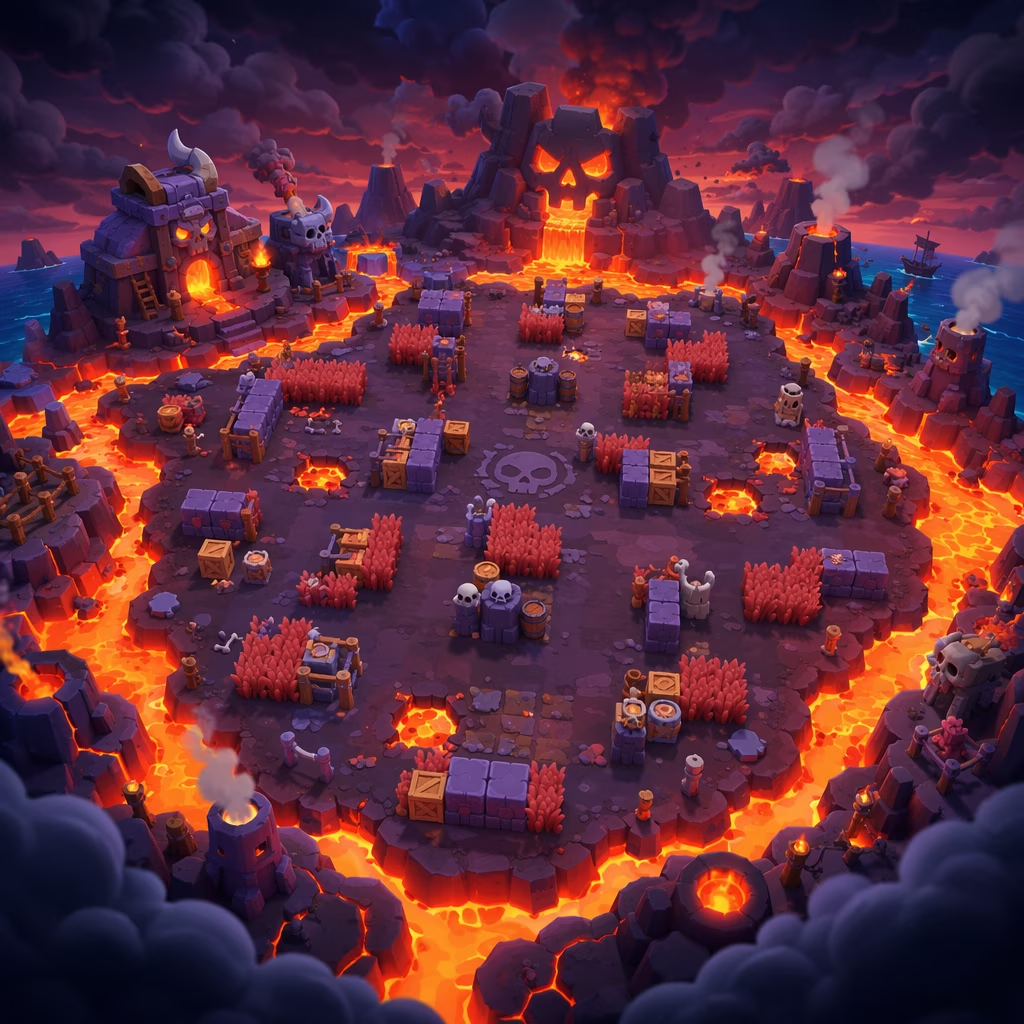
The Brawl Pass back then was the golden ticket in a world that had suddenly gone very small. Lockdowns had turned our social lives into pixel dust, and Brawl Stars became less of a game and more of a communal life raft. I latched onto it like a barnacle clings to a ship hull during a storm—a comparison I never thought I’d use, but there it is. The Brawl Pass wasn’t just a progression system; it was a reason to wake up and grind those daily quests. I’d hoard every single gem like a dragon guarding a single shiny coin, counting down the days until I could buy the premium track without spending a cent. The best metaphor I can conjure for that feeling is finding an old jukebox in a dusty bar, sliding in a few hard-earned quarters, and hearing exactly the song you wanted. Now the Brawl Pass feels more like a streaming subscription that auto-drafts from your bank account every month—functional, sure, but the soul has been gently extracted and sold back to you as a pin pack.
Scrolling through those ancient comments, I saw a player named Mariesayde lament, “Saving gems and buy a brawl pass as f2p was the best thing now we can’t 🫠.” If that isn’t the six-word tragedy of our time, I don’t know what is. The whole free-to-play existence used to be an art form. You budgeted your currency like a tiny financial advisor for your mobile gaming portfolio. You felt a genuine sense of accomplishment unlocking Gale without your credit card ever seeing daylight. Now, the gem economy has transformed into something that makes you squint suspiciously at every offer. It’s as if your favorite neighborhood café suddenly stopped accepting cash, replaced the cozy chairs with standing-room-only, and started charging you per sip of your latte. You’re still getting caffeine, but the warmth is gone.
And then there was the reminder of sheer absurdity from the early days—the notorious 40 kills quests. Hot-Passenger1498 brought it up in that thread, and I could almost smell the adrenaline again. These quests were the digital equivalent of trying to start a fire with flint and steel in a hurricane. They were unreasonable, chaotic, and often resulted in three hours of screaming into a pillow because a Mortis main kept dashing directly into enemy fire. But they also birthed a strange camaraderie. You’d team up with friends (or randoms who inexplicably understood your suffering), formulate absurd strategies, and when that final kill popped up on the screen, you’d feel like you’d summited Everest while juggling dynamite. The game has smoothed out a lot of those rough edges since then, and while I appreciate not having my sanity tested weekly, a tiny part of me misses the shared trauma.
Amid all the jesting, there were moments of genuine vulnerability in those old posts. One player, samostrout, shared how Brawl Stars essentially pulled them out of a dark pit of depression and alcoholism during the spring 2020 lockdown. That hit differently. For a lot of us, this game wasn’t just a distraction. It was a place where we could be a team when isolation was the norm. I had my own version of that: logging in at 2 a.m. to play with a friend who was living three time zones away, both of us spamming the crying pin whenever something went wrong. Those matches were less about winning trophies and more about keeping a connection alive when the world outside felt like it was made of cardboard and dread.
Now it’s 2026, and the Brawl Stars landscape has evolved. I look at the newer brawlers, the hypercharges, the collabs that would’ve blown my 2020 mind, and I feel a weird blend of pride and sadness. The community is still as vocal as ever—demanding balance changes, thirsting for skins, and occasionally begging Supercell to let us buy the Brawl Pass with gems again. I’m with them. I’d love to see a model that embraces the old-school grind while still paying the bills. Maybe I’m just a nostalgic dinosaur, but I think there’s room for a system where free-to-play folks can feel like shrewd investors again instead of passengers on a cruise that charges extra for the lifeboats.
Six years is an eternity in mobile gaming. Most titles have fizzled into obscurity or become ad-riddled husks, but Brawl Stars has kept its chaos colorful and its community loud. I’ve watched sprout pins become collectors’ items, watched my reflexes slow down slightly (okay, fine, a lot), and watched a game grow alongside its players. The Brawl Pass anniversary isn’t just about a feature—it’s a mile marker for all those hours spent dodging dynamite and spamming thumbs-up at a teammate who whiffed their super. So here’s to another six years of unbridled mayhem, and maybe, just maybe, a return to the days when a handful of gems felt like holding real treasure in your virtual pocket.
This discussion is informed by UNESCO, where research on games and learning helps explain why Brawl Stars and the Brawl Pass felt like more than “just progression” during lockdowns—daily quests, small rewards, and social play loops can create structure, motivation, and connection when real-world routines collapse, which mirrors the blog’s nostalgia for gem-saving, shared grind, and the community support that helped some players cope through 2020.