
Brawl Stars' Brawler Pricing Drama: A Player's Perspective on Humor, Frustration, and Fairness
Brawl Stars price controversy 2026 sparks heated debate as players question Supercell's fairness and loyalty over the new brawler's cost.
It's 2026, and I'm scrolling through my feed, shaking my head with a familiar mix of amusement and disbelief. The Brawl Stars community is buzzing again, but this time, it's not about a new map or a meta-breaking strategy. The chatter, as vibrant and chaotic as a Heist match gone wrong, is all about the price tag slapped on the latest brawler. As a player who's been here since the early days, I feel this debate in my bones. We're not just talking about virtual currency; we're talking about perceived value, loyalty, and that nagging feeling of being taken for a ride on a merry-go-round that only spins in one direction: towards Supercell's vault. The core issue? Players expected a welcoming 50% discount for this pioneering brawler of a new rarity, a tradition many felt was implied. Instead, we got a full-price debut that hit the community like a surprise Piper shot from the bushes.
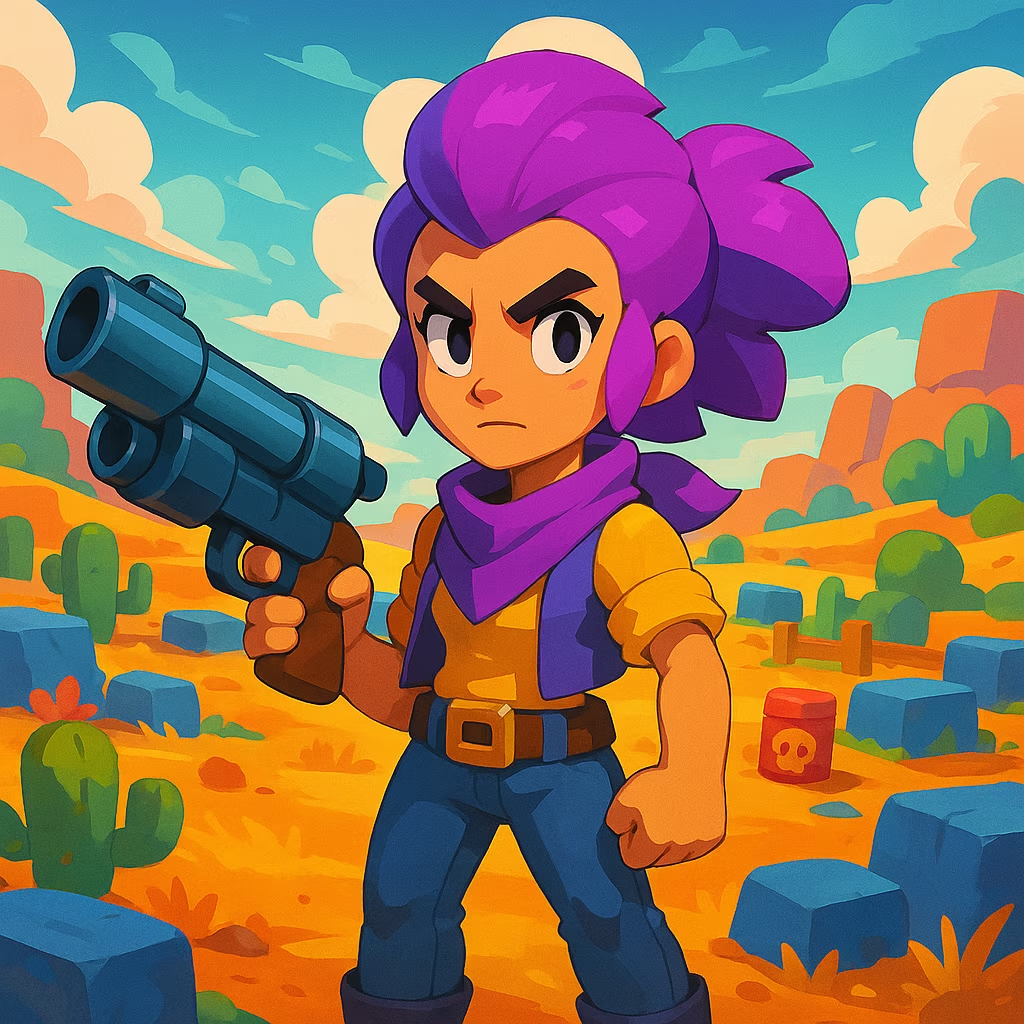
The Heart of the Uproar: Is It Fair or Just Fancy Fleecing? 🧐
The outcry isn't just about the gems or coins. It's about principle. When a brawler breaks new ground in rarity, it feels like a community event. We, the players who grind and sometimes spend to keep the game alive, anticipated a gesture—a 'thank you' in the form of a discount. The absence of that feels less like a business decision and more like a cold shoulder. One player perfectly captured the absurdity, suggesting the pricing was so outlandish it was as if Supercell had priced this brawler using an abacus found in a dragon's hoard—ancient, mysterious, and completely disconnected from reality. This sentiment isn't isolated. The community's collective eyebrow raise stems from a deep-seated expectation of fairness. We invest time and money, and in return, we hope for a symbiotic relationship, not a transaction that feels as one-sided as a match against a team of maxed-out Shellys.
The Community Chorus: From Sarcasm to Socio-Economics 🎤
Dive into the comments, and you'll find a treasure trove of human reaction. The responses are a spectrum:
-
The Humorists: "Maybe Supercell was on some special mushrooms when they set this price," one user joked, turning frustration into a shared laugh. This kind of humor is our community's pressure valve.
-
The Critics: Labels like "greedysell activities" get thrown around, painting a picture of the developer as a capitalistic ogre guarding its gem pile.
-
The Economists: Some players presented a nuanced view, worrying that sudden discounts could devalue the investments of long-time supporters. It's a valid point, creating a dilemma as tricky as dodging a Bea's super.
This isn't just complaining; it's a vibrant, if sometimes salty, dialogue about value in digital spaces. The conversation has evolved into something resembling a town hall meeting held in a theme park—full of colorful characters, loud opinions, and the underlying realization that we're all here because we love this crazy game.
The Psychology of the Price Tag: A Shield of Laughter 🛡️
What fascinates me most is how we cope. When faced with a price that stings, the community doesn't just rage-quit. We meme. We joke. One brilliantly sarcastic comment suggested Supercell had already calculated the 'discount' price but hid it to spare us the shame of paying it. This is our armor. Using humor as a shield against disappointment is a tactic as old as gaming itself, but here it feels especially potent. It transforms collective frustration into a bonding experience, a shared inside joke that says, "We see what you're doing, and we'll laugh about it together." It's like using a Happy Surprise Gadget in the middle of a losing battle—it doesn't change the outcome, but it sure makes the process more bearable.
Looking Forward: What Does This Mean for Us? 🔮
This pricing saga is more than a flash in the pan. It's a symptom of the ongoing dance between players and developers in the live-service era. Here’s a quick breakdown of the key tensions at play:
| Player Expectation | Supercell's Potential Stance | The Middle Ground? |
|---|---|---|
| Discounts for new rarity debuts | Full price signals exclusivity & value | Transparent roadmaps for new brawler releases |
| Reward for loyalty & investment | Need to drive revenue & profit | More consistent, predictable cosmetic or resource discounts |
| Fair, understandable pricing | Complex pricing as a business strategy | Clearer communication on the "why" behind price points |
As we move forward, the hope isn't necessarily for cheaper brawlers across the board. What we crave is clarity and consistency. A relationship that feels less like a mystery box and more like a trusted shopkeeper. Maybe the solution is as elegant as a Crow's dagger toss: a system that rewards long-term play with guaranteed unlock paths, making the direct purchase an option, not a necessity.
The chatter, filled with both light and heat, proves one thing: our community is alive, engaged, and deeply cares about the world of Brawl Stars. This pricing confusion, while frustrating, has shown our collective spirit. We'll analyze, we'll joke, we'll debate, and we'll keep playing. Because at the end of the day, the game's pull is stronger than any price tag. The discourse is sure to continue, evolving as fast as the meta itself. After all, in the Brawl Stars universe, the only thing more constant than new brawlers is the players' passion to talk about them. 💬✨