
Brawl Stars Community Battles Toxicity with Kindness
Brawl Stars toxicity threatens its vibrant gameplay, as verbal abuse and negativity sour the mobile gaming experience for many players.
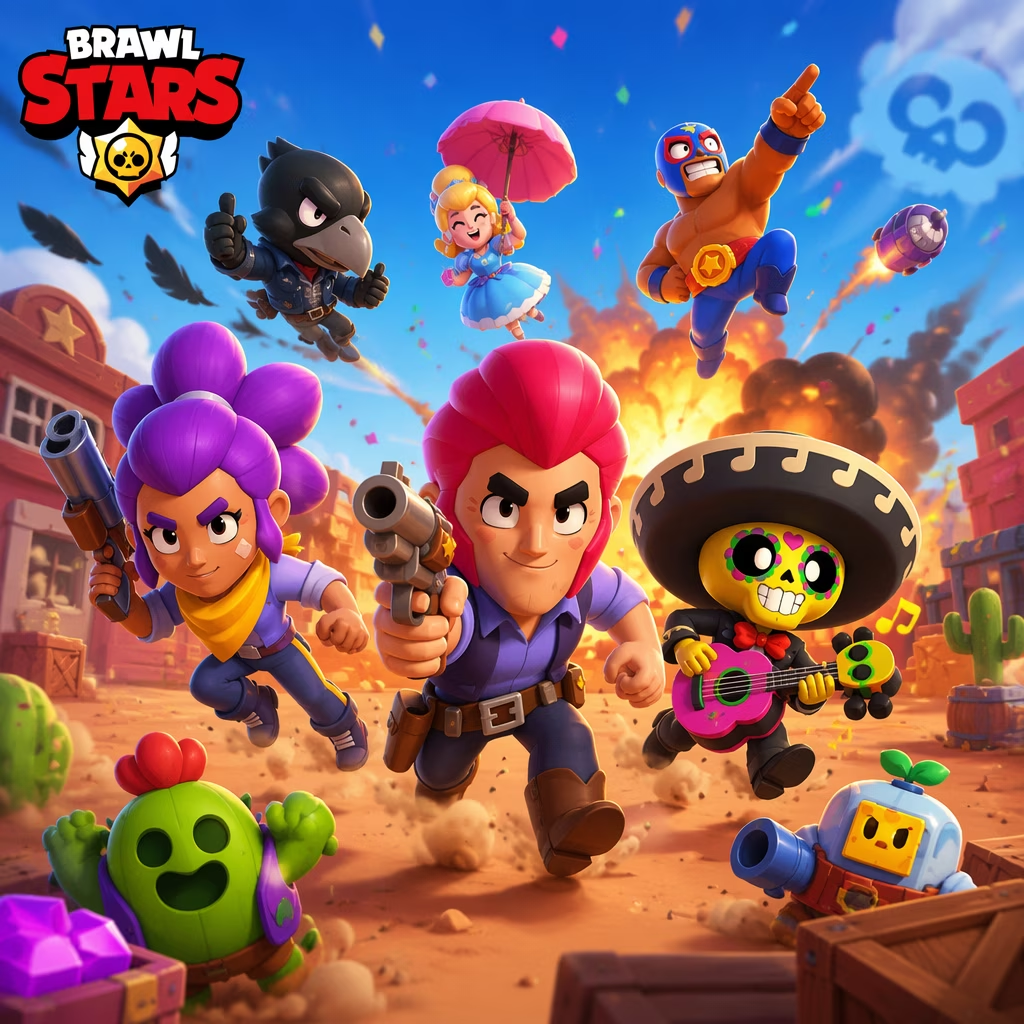
In the kaleidoscopic arenas of Brawl Stars, where a cactus in a sombrero can slap a robot and a crow drops poison like confetti, one would assume the only thing flying is fun. Yet, behind the victory dances and star-powered takedowns, a less colorful element has been creeping in: toxicity. A post from the ever-observant Redditor Alex1899_ threw open the saloon doors on this issue back in 2023, and the conversation is still hotter than a Bull charging through a wall in 2026. Alex detailed how, in a game designed to be a joyful brawl, players are slinging not just virtual punches but vile words like "go die"—phrases that threaten to turn the game from a playground into a psychological boxing ring.
Alex1899_ admitted they could personally shrug off the hate thanks to a sturdy mental shield, but they couldn’t stop wondering about the invisible casualties. The young kid who just got pummeled in Showdown, the teen already battling real-life monsters outside the screen, the adult seeking a quick escape—all could be on the receiving end of a stray "delete the game, loser." The post became a rallying cry, revealing that many members of the Brawl Stars congregation are just as tired of the verbal smog choking the game’s bright bubble.
Commenters soon piled in, adding their own head-scratching observations. The perplexing trend of dragging mothers into the fray got special attention: "Why do the moms always get strays?" one bemused brawler wrote, as if there’s a secret contest for the most unnecessary familial jab. It seems that behind the safety of a screen, some players unlock a hidden brawler called "Keyboard Cruelty," whose Super is a blast of unfiltered anger. The consensus? Toxicity isn’t just a nuisance; it’s a killjoy that can sour the entire experience, making victories feel hollow and defeats unnecessarily bitter.
A hefty chunk of the discussion turned to amateur psychology—why does a friendly mobile game turn some people into digital grouches? One player offered a mirror: "When I lose, I usually look towards how I can improve." That simple switch, from blaming the world to inspecting one’s own gameplay, separates the true brawlers from the tantrum-throwers. Many believe that the aggressors are actually projecting personal disappointments onto strangers, using the game as an emotional punching bag. Instead of acknowledging a loss with a shoulder shrug, they empty a clip of insults, as if every defeat were a personal betrayal by the entire universe.
Of course, no discourse about online behavior is complete without the "what if we could chat" debate. The mere whisper of an in-game chat feature sends shivers down the spines of veteran players, one of whom declared, "If Brawl Stars ever adds some sort of in-game chat feature, we are BEYOND cooked." The fear is that unstructured communication would open Pandora’s box, unleashing a tidal wave of ear-burning language that no mute button could fully contain. Yet, sprinkled among the dread were hopeful visions: imagine after a nail-biting loss, a player sends a friend request not to spew salt but to share a tip. "That would be so wholesome," the dreamers say, painting a picture of a Brawl Stars where post-match banter swaps "you're trash" for "hey, try using that gadget earlier next time."
This brings us to the heart of the movement: rewriting the social script of competitive play. Players are actively discussing how to use the existing tools—reporting, blocking, and sending positive vibes after matches—to slowly scrub the toxicity away. The idea isn’t just to police the bad apples but to drown them in kindness. In 2026, the community has already seen seeds of this take root. More players share replay analyses in Discord servers, congratulate opponents on clever plays with a spin or a throw of a heart pin, and call out toxic behavior not with equal venom but with a calm "dude, chill."
It turns out that creating a friendly arena isn't solely on Supercell’s shoulders; every single brawler holds a piece of the puzzle. As one guardian of good vibes noted, "It’s about creating a safe space for everyone who loves this game." That doesn't mean turning Brawl Stars into a bubble-wrapped playground where everyone gets a trophy—fierce competition is the game's spinach, after all—but it does mean recognizing that the person behind the Mortis dashing into your base might be someone who just needs a little less hostility in their day.
The path forward, as sketched by Alex1899_ and the many voices that rallied behind them, is refreshingly simple: choose kindness without losing the edge. Celebrate your sick plays, but don’t use your opponent's missed shots as an excuse to unleash verbal chaos. Report the genuinely harmful, educate the merely frustrated, and remember that every brawler—whether a trash-panda-cheeked child or a grizzled adult—came to have fun. In a world filled with enough real-life barrels to dodge, the Brawl Stars community is learning that the best power-up isn’t a damage gear or a star power; it’s a culture where nobody’s mom gets an unwarranted mention, and where "well played" carries more weight than "get rekt." The brawl may be chaotic, but the spirit behind it doesn’t have to be.