
Dota 2 MMR Explained: How to Check Your Rating, Improve Your Rank, and Master Matchmaking in 2026
Discover the Dota 2 MMR system and its impact on matchmaking—unlock your skill progression and climb the ranks with strategic mastery.
In the ever-evolving competitive landscape of Dota 2, the Matchmaking Rating (MMR) remains the ultimate litmus test for player skill and progression. As of 2026, this numerical system, developed by Valve, continues to be the core metric that determines a player's standing in the ranked ecosystem, pairing individuals of similar skill levels to ensure balanced and engaging matches. For the uninitiated, MMR might seem like just another gaming acronym, but for the dedicated player base, it's the heartbeat of the competitive experience—a quantifiable measure of one's journey from a casual enthusiast to a potential pro. It's the difference between being a 'noob' and climbing the ranks to become a respected player in the community. The system has undergone refinements over the years, but its fundamental purpose persists: to create a fair playing field where victory is earned through skill, strategy, and teamwork, not luck.

What Exactly is MMR?
MMR, or Matchmaking Rating, is essentially a hidden Elo-like score that the game's backend algorithms use to gauge a player's skill level. Think of it as your Dota 2 GPA. The game's match coordinator utilizes this rating—along with other factors like behavior score—to find viable opponents and teammates. Dota 2 operates with two primary types of MMR:
-
Core MMR: For players who queue as Carry, Mid, or Offlane.
-
Support MMR: For players who queue as Soft Support or Hard Support.
This role-based separation, introduced years ago, ensures that a player's skill in a specific position is accurately reflected. The system aims for all players in a given match to have roughly the same MMR, creating that sweet spot of a challenging yet winnable game. However, in lower-population regions or during off-peak hours, the matchmaker might cast a wider net, occasionally including players from adjacent ranks to reduce queue times. It's a constant balancing act for Valve.
How to Check Your Own MMR (Step-by-Step Guide)
Wondering what your magic number is? Checking your MMR is a straightforward process in the Dota 2 client. Here’s the lowdown:
-
From the main menu, click on your Profile icon (usually your avatar in the top-left corner).
-
In your profile, navigate to the Stats tab.
-
Your current MMR for both Core and Support roles will be prominently displayed on the top right side of the stats window, often alongside your current rank medal (e.g., Archon, Legend, Ancient).
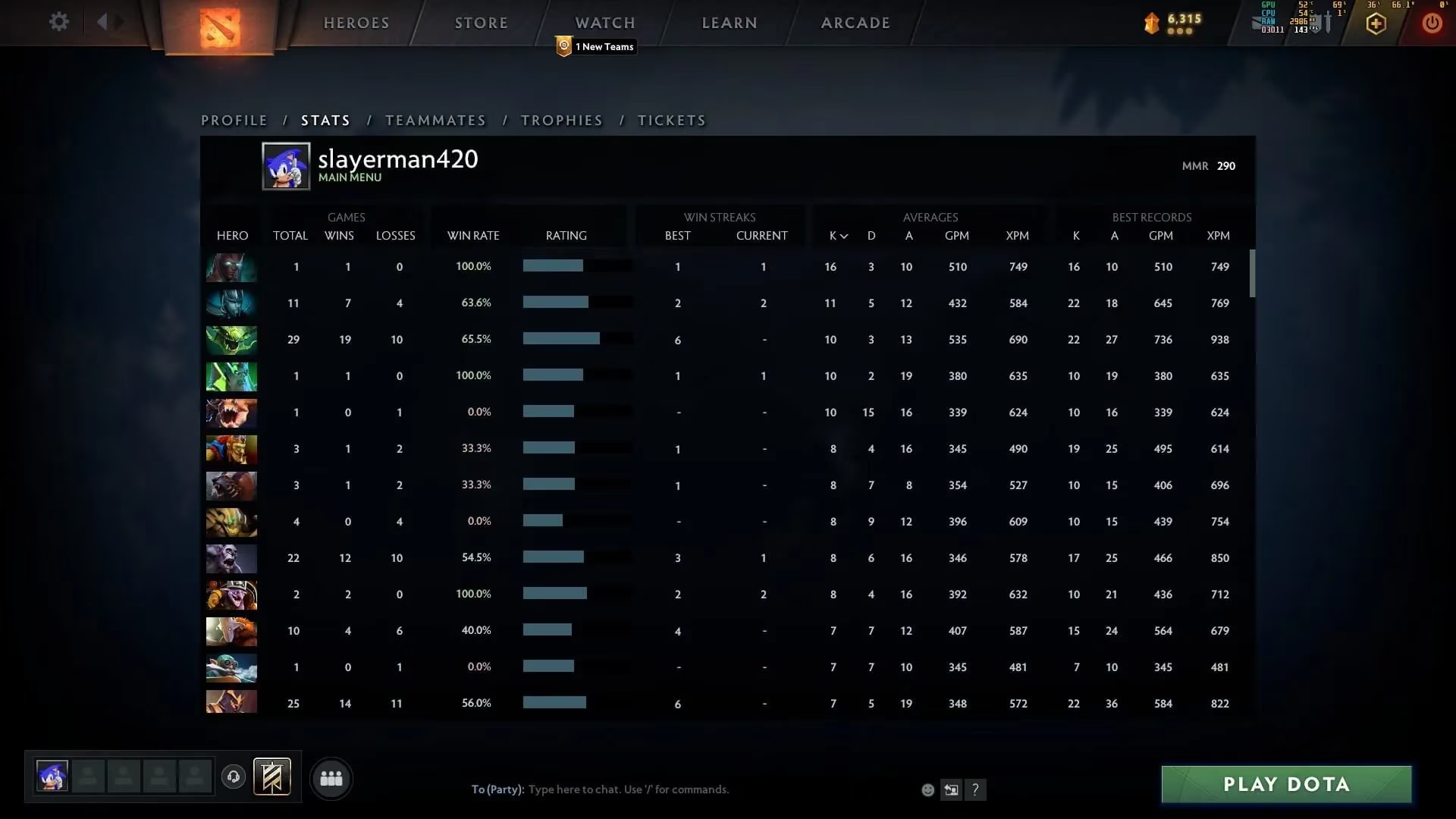
The Stats tab is a goldmine of information. Beyond just your rating, you can analyze:
-
Your most-played and most successful heroes (your 'bread and butter' picks).
-
Win rates for different roles and heroes.
-
Detailed match history and performance trends.
This data is invaluable for self-improvement. If your win rate on a certain hero is in the gutter, it might be time to hit the demo mode or watch some pro replays before queuing with it again.
How to Check an Opponent's MMR (If You're Curious)
After a tough loss or a spectacular win, you might be curious about the skill level of your rivals. You can check an opponent's MMR, but there's a catch: their profile must not be set to private. If it's public, simply:
-
Click on their name from the post-game scoreboard or find them in your recent players list.
-
Open their Profile.
-
Click on the Stats tab.
-
Their MMR will be located in the same spot—top right.
This can provide context for a match. Getting stomped by a player 1000 MMR above you? Don't sweat it; it was a tough matchup. Beating someone significantly higher? That's a major confidence boost and a sign you're improving!
Analyzing Your Role Performance
Your overall MMR tells one story, but your performance in specific roles tells another. Dota 2 provides detailed insights into how you fare in each position. To access this intel:
-
Click Play Dota on the main menu.
-
Hover your mouse over the Role Queue button (the icon with multiple heroes).
-
Keep the mouse hovered over the button. A detailed pop-up will appear, showing your current rank and MMR for each of the five roles: Carry, Mid, Offlane, Soft Support, and Hard Support.
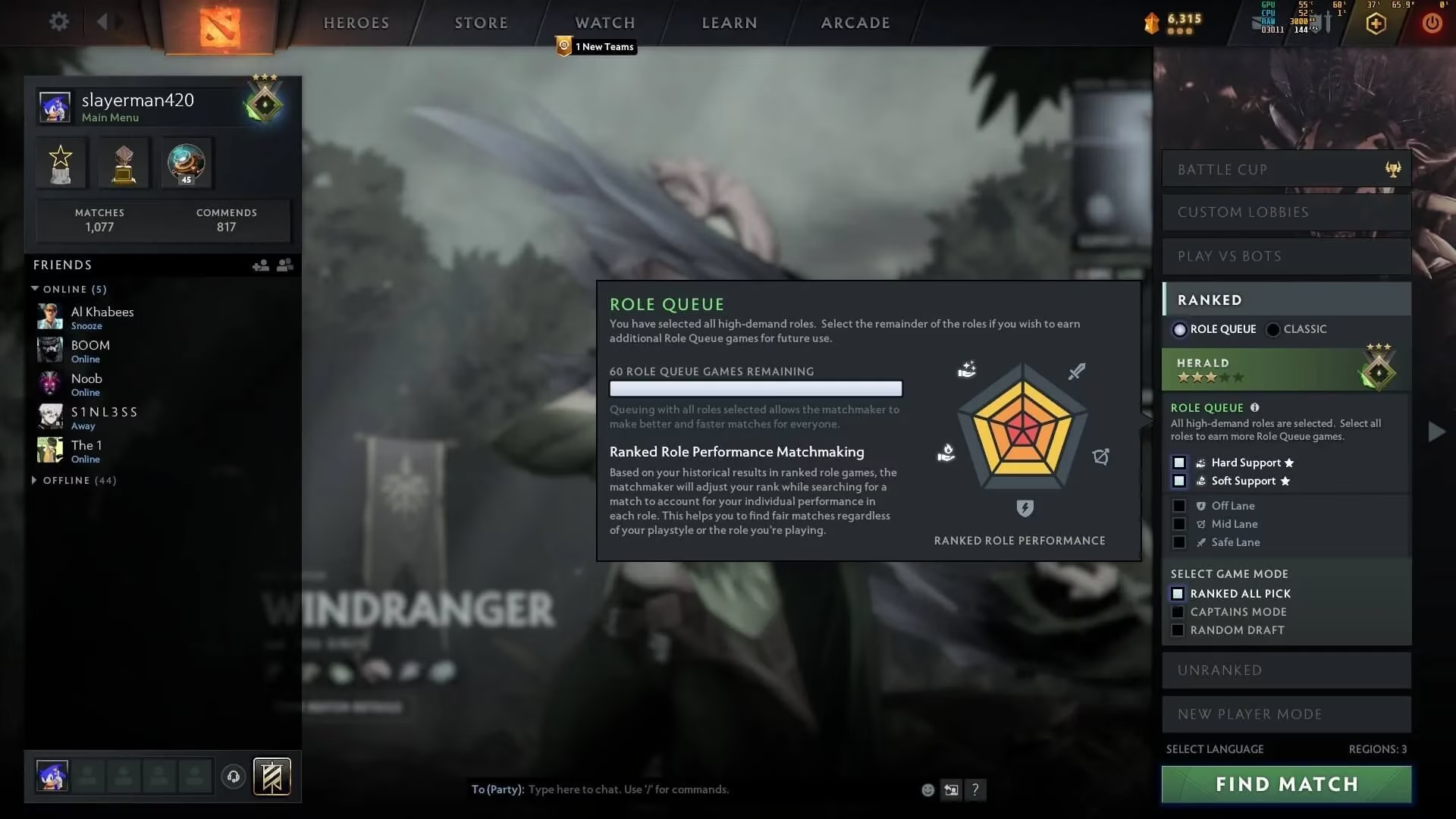
This breakdown is crucial for identifying strengths and weaknesses. Maybe you're an Ancient-level Support but only a Crusader-level Carry. This knowledge helps you make smarter queueing decisions and focus your practice where it's needed most. It’s all about playing to your strengths.
The Path to Ranked: Unlocking Your MMR Journey
Brand new players don't start with an MMR. The ranked arena is locked behind a barrier to entry, designed to ensure players have a basic understanding of the game before entering the competitive fray. As of 2026, the requirements to unlock ranked matchmaking and earn your first MMR are:
| Requirement | Description | Purpose |
|---|---|---|
| 100 Hours Playtime | Must be accrued in unranked matches (vs. bots or players). | Ensures fundamental game knowledge and mechanics are learned. |
| Linked Phone Number | A unique mobile number must be verified on your Steam account. | A key anti-smurfing and anti-cheat measure to maintain integrity. |
| 10 Calibration Matches | A series of 10 ranked games to determine your initial MMR. | The system observes your performance to place you in the appropriate skill bracket. |
Once you complete these steps, you'll be assigned an initial MMR and a corresponding rank medal. Those ten calibration matches are your chance to make a strong first impression on the system, so bring your A-game!
The 2026 MMR Meta: Tips for Climbing the Ranks
Gaining MMR is the name of the game for competitive players. Here are some evergreen and contemporary strategies for positive MMR gain:
-
Master a Role, Then a Hero Pool: Don't be a jack-of-all-trades. Excel in one or two roles and have a small, well-practiced hero pool (3-5 heroes) for each. Depth beats breadth.
-
Communication is Key: Use voice chat or pings effectively. A well-coordinated team with lower average MMR can often defeat a disorganized team with higher MMR. Teamwork makes the dream work.
-
Review Your Replays: This is non-negotiable for serious improvement. Watch your losses to spot critical mistakes in positioning, item choices, and map awareness.
-
Mindset Matters: Tilt is the ultimate MMR killer. If you lose two games in a row, take a break. Queueing while frustrated often leads to a losing streak. Remember, it's a marathon, not a sprint.
-
Leverage In-Game Resources: The post-2024 tutorial systems and hero-specific guides (often written by top players) integrated into the game are better than ever. Use them.
Dota 2's MMR system, while sometimes a source of frustration, remains one of the most robust competitive frameworks in esports. It provides a clear, long-term progression path in a famously complex game. Whether you're grinding to reach the next medal or just playing for fun with friends, understanding your MMR gives you insight into your place in the vast Dota 2 universe. So check your stats, analyze your play, and get ready for your next match. The climb awaits!