
Dota 2's New Hero Muerta: The Day of the Dead Marksman Haunting the Meta
Muerta Dota 2 hero reveal captivates fans with her haunting Día de los Muertos design, sparking intense speculation and excitement in the gaming community.
In the world of competitive gaming, few events generate as much anticipation as the reveal of a new hero for Dota 2. Following her dramatic unveiling at The International 2022 in Singapore, the spectral gunslinger Muerta has been a constant topic of speculation and excitement. As the 124th hero to join the ever-expanding roster, she represents not just a new gameplay option, but a significant cultural infusion into the game's universe. With her design deeply rooted in the Mexican Day of the Dead (Día de los Muertos) tradition, complete with skull-like features and vibrant marigold flowers, Muerta's arrival promised to bring a fresh, haunting aesthetic to the lanes of Dota.
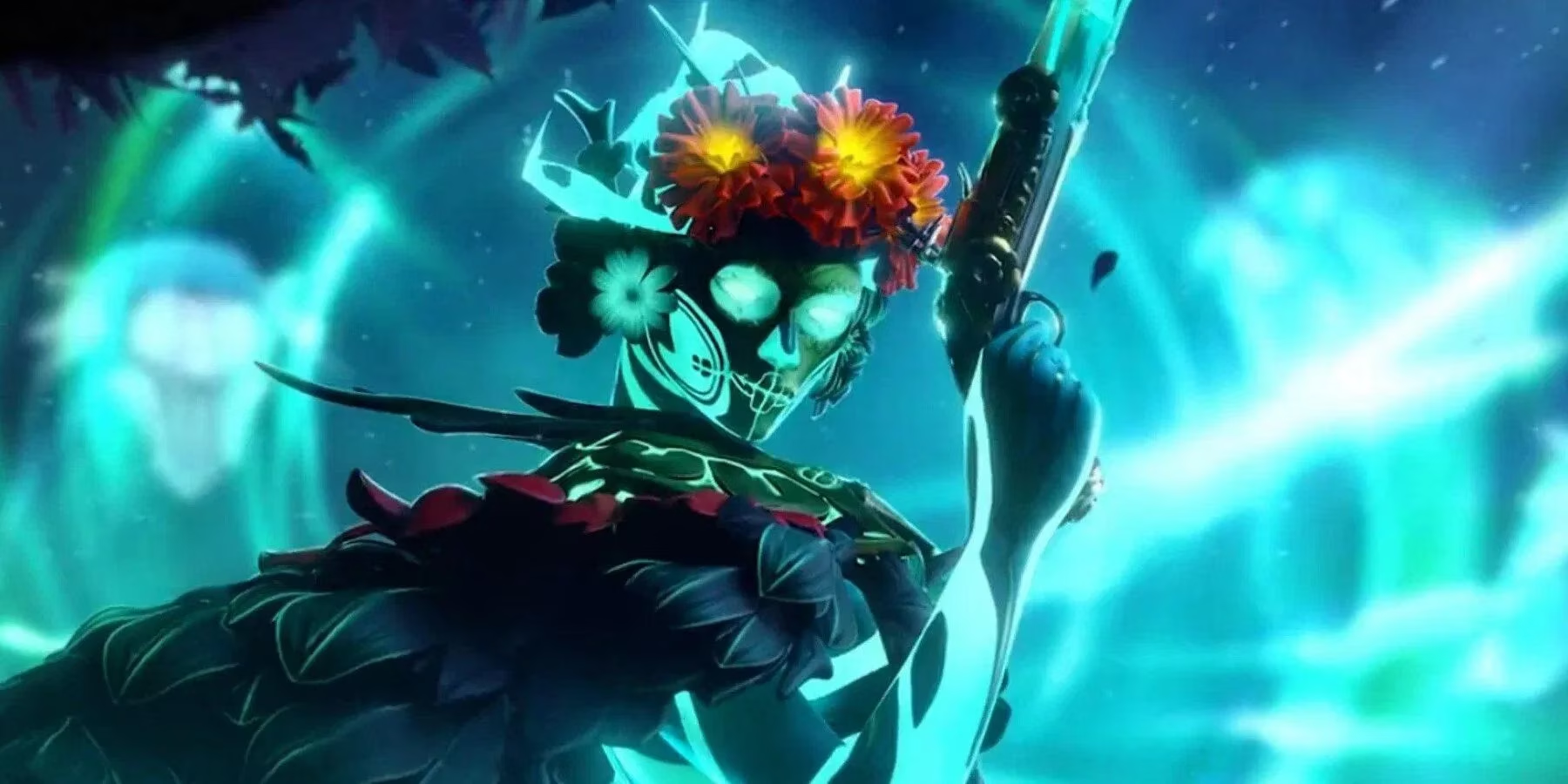
The Teaser and Initial Speculation
The 50-second teaser shown at TI11 was a masterclass in atmospheric storytelling. It depicted Muerta transforming into a wraith-like being, pulling a gun, and declaring her intent to "haunt the lanes." This single phrase sent the community into a frenzy of theory-crafting. What did it mean for her gameplay? Was she a phantom permanently crossing between worlds? The imagery of surrounding ghosts suggested abilities tied to summons or spectral companions. Immediately, comparisons were drawn to existing heroes. Could she be a ranged carry, a magical damage dealer, or perhaps a unique hybrid?
-
Role Theories: The most prevalent early theories positioned her as either a ranged agility carry, akin to Sniper or Drow Ranger, or a powerful intelligence-based nuker. Her firearm heavily suggested a physical damage focus, but her ethereal form hinted at magical capabilities.
-
Lore Connections: Her monologue and aesthetic led many to theorize a connection to the Sisters of the Veil, potentially making her a sister or counterpart to Phantom Assassin. This opened up fascinating narrative possibilities within Dota's complex lore.
-
Post-Death Mechanics: One particularly intriguing fan speculation, highlighted in community forums, was that Muerta might possess abilities that remain active or trigger after her death—a mechanic that could fundamentally alter teamfight dynamics.
Community and Professional Reaction
The reveal was met with overwhelming positivity. For many, it was the introduction of the first explicitly Mexican-inspired hero, a long-awaited moment of representation celebrated by fans from that region and beyond. Esports organizations like OG and Evil Geniuses expressed immediate interest, with players eager to test her potential in the competitive meta. The design was praised for its originality and respectful cultural homage, standing out in a roster filled with fantasy archetypes.
But what does her arrival mean for the game's balance? With over 120 heroes, each new addition risks destabilizing the delicate meta. Players were hopeful that Muerta would bring "fresh and unique abilities" that offered new strategic depth without being overwhelmingly powerful or, conversely, underwhelming upon release.
Muerta's Impact on the Dota 2 Meta (2026 Perspective)
Now, several years after her planned early-2023 release, we can look back at Muerta's journey. Did she become a meta-defining hard carry? Did she break the game, or did she find a balanced niche? While the initial article could only speculate, her integration into Dota 2 has been a fascinating case study in hero design.
Her eventual kit, as released, blended gunplay with ghostly magic, often focusing on:
-
Piercing Attacks: Bypassing certain defenses, living up to her "pierce the veil" tagline.
-
Spectral Synergy: Abilities that interact with or are empowered by the deaths of units (allies or enemies) around her.
-
A Hybrid Damage Profile: Allowing her to adapt her item build to counter the enemy team, making her a versatile pick.
Her presence challenged traditional positioning and drafting strategies. Teams had to consider: How do you fight a hero that grows stronger in extended engagements or around fallen comrades? The initial hope that she would "be able to farm during battles" was partially realized through abilities that rewarded active participation in skirmishes over passive jungling.
A Lasting Legacy
Muerta's release was more than a gameplay update. It was a cultural moment for Dota 2, expanding its visual and thematic language. It proved that the game, even after a decade, could introduce compelling new characters that resonate deeply with its global audience. Her development from a teaser at TI11 to a fixture in the hero pool shows Valve's commitment to evolving the game. For players, she offered a new playstyle to master; for the esports scene, a new variable in the highest-stakes equations; and for the community, a beloved figure whose Day of the Dead aesthetic continues to inspire fan art and cosmetics.
As Dota 2 moves forward, the question remains: What other cultural inspirations and gameplay innovations await in future hero releases? If Muerta's haunting success is any indicator, the future of the Dota roster is as bright and unpredictable as a marigold-strewn path on the Day of the Dead. The lanes, it seems, will never be the same.