
Forgotten Champions: The Dota Clones That Carved Their Own Legends
Explore the legacy of Dota and the fascinating rise of Dota clones, as unique MOBA games like Demigod and Avalon Heroes redefine epic strategy.
In the digital pantheon of gaming, few deities cast a shadow as long and influential as Defense of the Ancients. Born from the fertile ground of Warcraft 3, Dota wasn't just a game; it was a revolution, whispering promises of strategic depth and heart-pounding clashes where individual heroes, not vast armies, became the instruments of victory. This potent alchemy of arcade adrenaline and cerebral warfare birthed an entire genre – the MOBA. Yet, like any true titan, its very success summoned echoes, reflections, and challengers eager to stand in its light. A whole constellation of Dota clones flickered into existence across the digital firmament. Many faded quickly, brief sparks against the night sky. But a few, these digital phoenixes, rose from the ashes of imitation, carrying the unmistakable Dota DNA while daring to sing their own unique songs. They remain, even in 2025, fascinating relics whispering tales of what might have been, and what boldly was.
Demigod: Where Myth Met Method
Developer: Gas Powered Games
Platform: PC
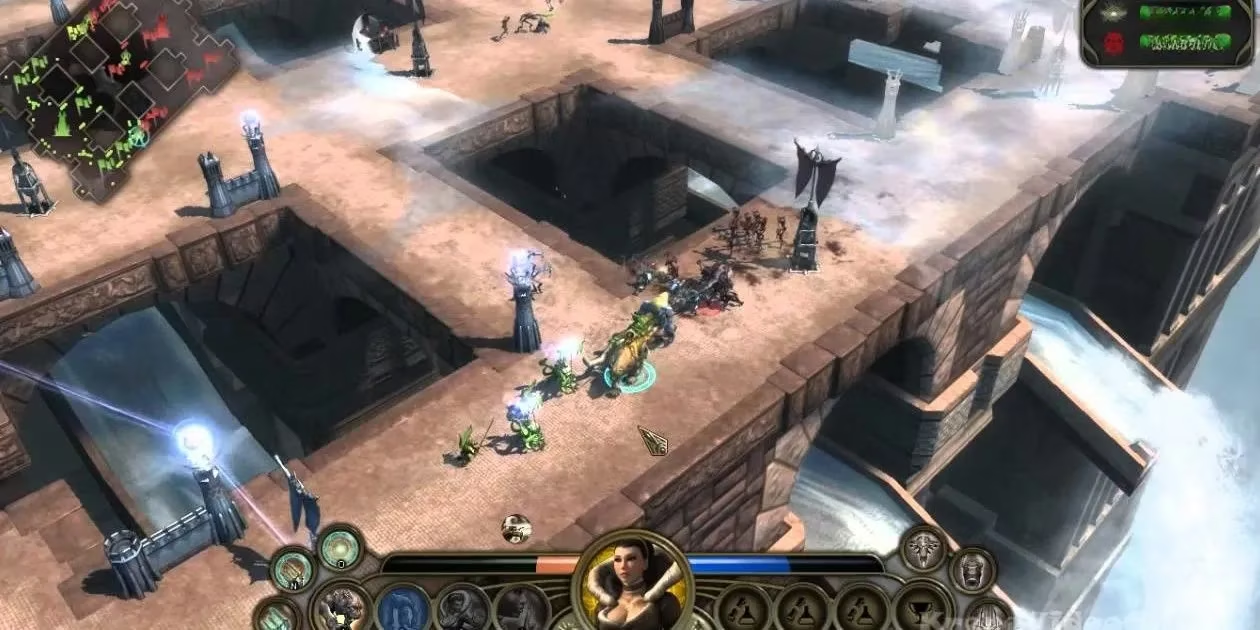
Demigod walked the earth in the genre's dawn, a primordial force feeling almost quaint by today's standards. Offering only eight heroes – starkly divided into Assassins and Generals – battling across modest arenas, its simplicity is undeniable. Yet, to dismiss it as merely basic is to miss its enduring grit. Demigod captured the raw, almost archaic, essence of early MOBA action blended with a surprisingly methodical strategic core. Where most clones bathed in the familiar, colorful fantasy hues inspired by Warcraft, Demigod dared to be different. It painted its world in the grittier, grander tones of Roman and Greek mythology. Imagine gods clashing on marble-cracked arenas! Talk about a game changer! This unexpected aesthetic backbone felt both fresh and perfectly suited to the genre's epic scale. Some saw whispers of SMITE's future path here, though Demigod remained firmly rooted in the classic Dota framework. It was a bold, unique vision – a tantalizing glimpse of an alternate MOBA evolution cut tragically short. One can't help but wonder what majestic pantheon it might have built given time.
Avalon Heroes: The Tale Beyond the Turret
Developer: WeMade Entertainment
Platform: PC
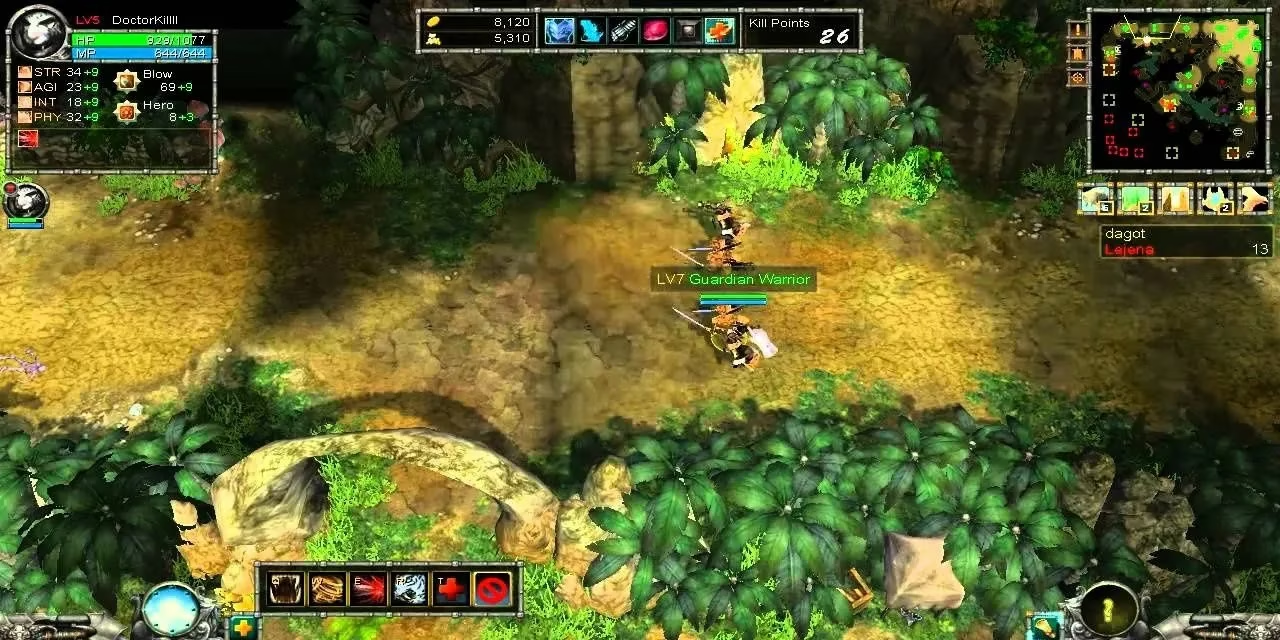
At first blush, Avalon Heroes seemed like just another face in the crowded Dota clone crowd, sporting a similarly stylized look. Its core offered the expected MOBA chaos across various multiplayer modes. But Avalon held a secret weapon, a feature as rare then as it is now: a genuine, extensive Story Mode. In a genre notorious for throwing players into the deep end of ability lists and chaotic team fights, Avalon offered a guiding hand. This narrative journey wasn't just lore fluff; it served as a vital tutorial, gently introducing the overwhelming mechanics and its original world. Without a pre-established universe like Warcraft to lean on, this Story Mode was essential. It breathed life into original characters and settings, giving players a reason to care before diving into the multiplayer fray. Investing in the story naturally fueled the desire to master the heroes in PvP. It was a masterstroke of onboarding, making the complex accessible. Honestly, why more MOBAs didn't (and still don't!) steal this page from Avalon's book is a head-scratcher. Perhaps its untimely shutdown a few years post-launch cast a shadow, a whispered cautionary tale. A real shame, that.
Heroes of Newerth: The Sharpened Edge of Evolution
Developer: S2 Games, Frostburn Studios
Platform: PC
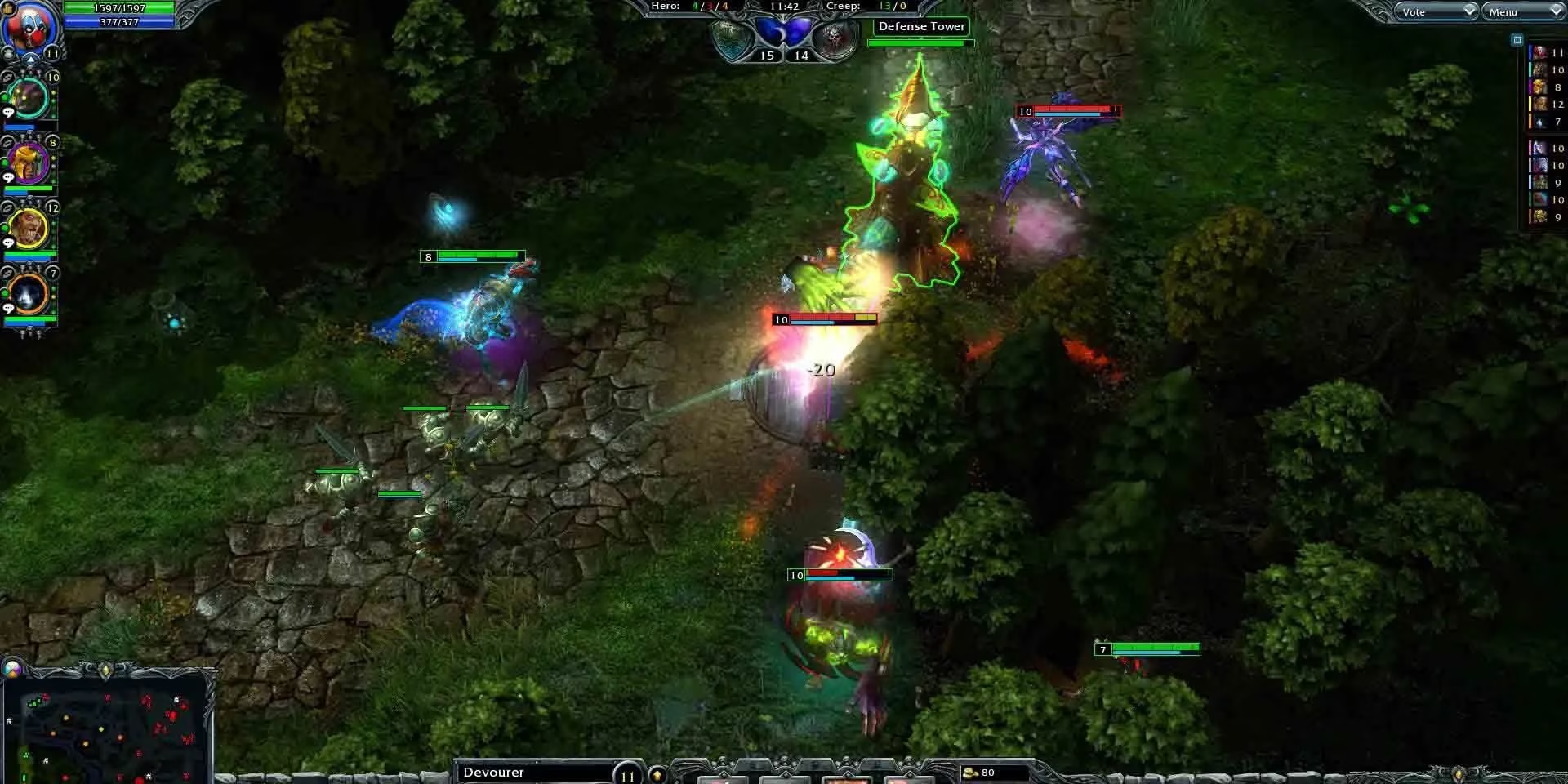
Heroes of Newerth (HoN) wore its Dota inspiration like a badge of honor, positioning itself as the logical, sharper-edged successor. Its core gameplay was deeply familiar – the same map, similar heroes, the frantic dance of spells and last hits. Sure, there were tweaks; an ability here functioned slightly differently, a mechanic there felt altered. This meant a steeper learning curve for Dota veterans, sometimes a real pain in the neck, but the fundamental, addictive core remained gloriously intact. HoN's true legacy, however, wasn't just in refinement, but in innovation. It brought crucial quality-of-life features to the forefront that players absolutely take for granted now:
| Feature | HoN's Contribution | Modern Standard? |
|---|---|---|
| Stat Tracking | Detailed post-match analytics | ✅ Ubiquitous |
| Matchmaking | Sophisticated ranking systems | ✅ Essential |
| Voice Chat | Integrated comms | ✅ Common |
| Reconnect | Ability to rejoin matches | ✅ Expected |
| Observer Mode | Robust tools for casting/viewing | ✅ Standard |
These weren't just bells and whistles; they were revolutionary tools that smoothed the often jagged edges of the early MOBA experience. HoN showed the path forward, even if its own journey was hampered by a crowded market and an initial price tag that felt out of step with the rising free-to-play tide. Its contributions, though, echo loudly in every modern MOBA lobby.
Heroes of the Storm: The Symphony of Shared Victory
Developer: Blizzard Entertainment
Platform: PC, OS X
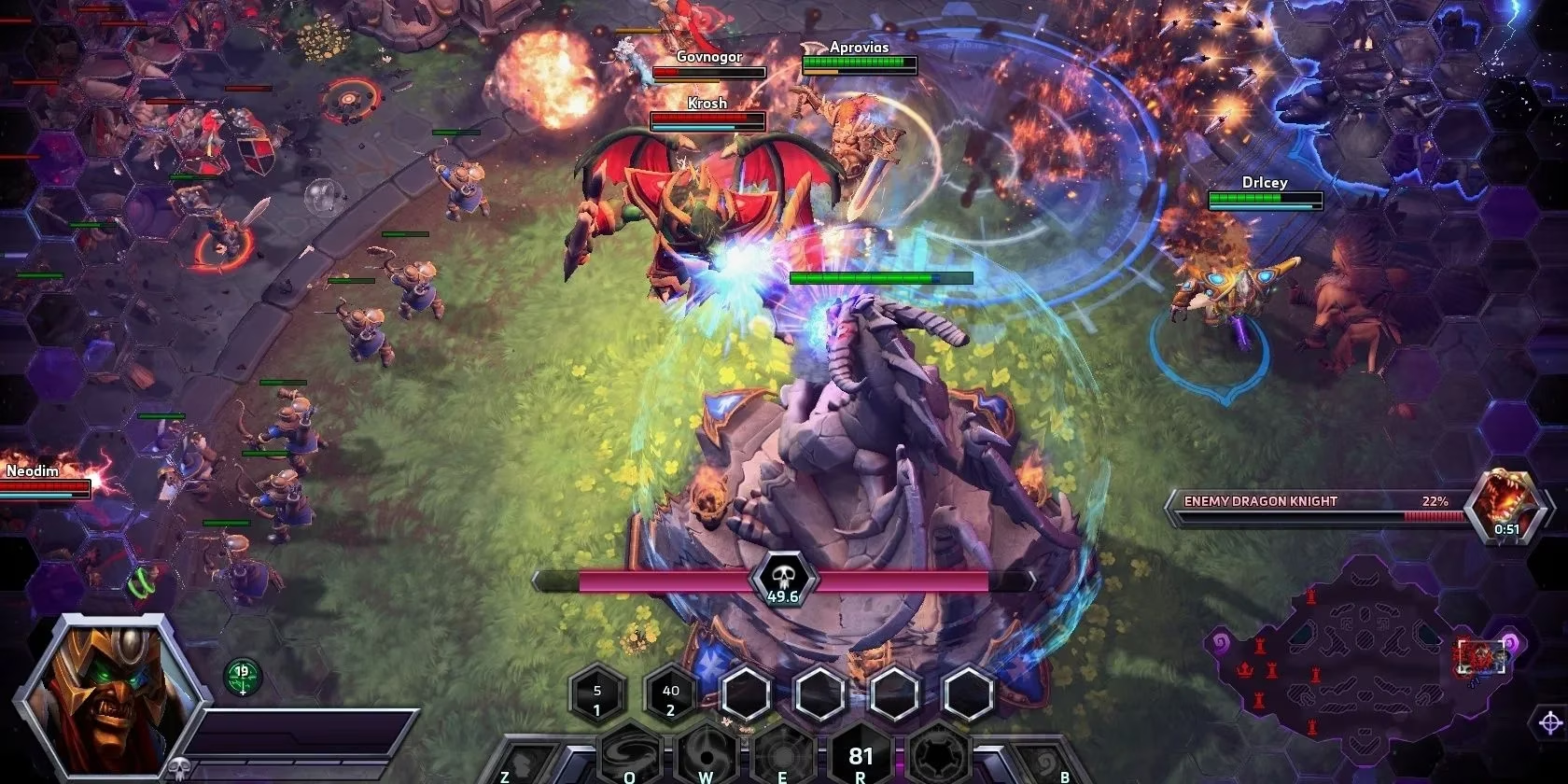
Ah, the delicious irony! Blizzard, whose Warcraft 3 cradle rocked Dota to life, eventually crafted their own homage: Heroes of the Storm (HotS). And they did it with the full, glorious weight of their iconic universes. HotS is a vibrant tapestry woven from threads of Azeroth (Warcraft), the Koprulu Sector (StarCraft), Sanctuary (Diablo), and even the near-future world of Overwatch. It’s the ultimate Blizzard crossover party, a deeper dive than the earlier Blizzard All-Stars concept. But beyond the fan-service thrill of seeing Arthas duel Diablo, HotS dared to fundamentally simplify the Dota formula, focusing intensely on pure teamwork.
-
Shared Experience: Gone are individual levels. The entire team levels up together, a single rising tide lifting all boats. No more lone wolves starving for XP!
-
No Gold/Items: Players can't buy power spikes. Victory hinges purely on map objectives, coordination, and skill expression within hero kits.
-
Diverse Maps: Multiple battlegrounds, each with unique, game-changing objectives (collecting doubloons for a pirate cannon barrage, anyone?), force constant adaptation.
This extreme focus on balance and collective action downplayed some traditional solo-carry potential, true. But it amplified cooperation like no other MOBA. Winning felt like a shared triumph, making the loop more accessible and less punishing. For those seeking fierce competition without the crushing weight of individual blame, HotS offered a haven. It whispered a different truth: sometimes, victory tastes sweetest when shared, a friendly match where ego takes a backseat to collective glory. Even in 2025, its unique symphony resonates with a dedicated chorus.
League of Legends: The Colossus That Walked Beside The Titan
Developer: Riot Games
Platform: PC, OS X
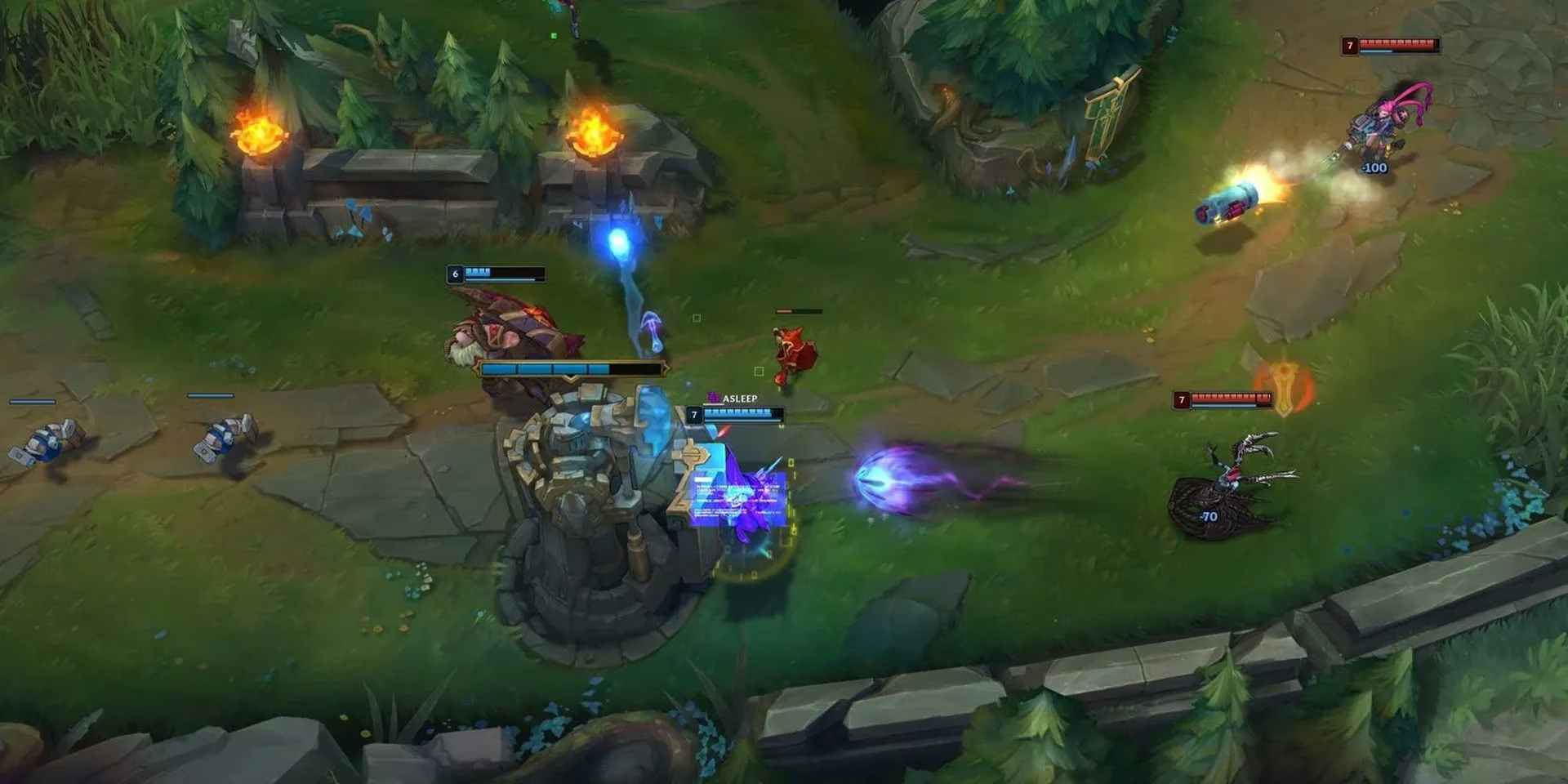
And then there was League. The clone that didn't just walk beside the titan; it grew to become one itself. League of Legends (LoL) is the undisputed phenomenon, the Dota-inspired creation that achieved stratospheric, enduring popularity. Over a decade strong in 2025, LoL is a living ecosystem. Seasons bloom and fade, bringing:
-
A vast, ever-growing roster of Champions (each with unique lore and mechanics)
-
Limitless cosmetic loot and customization
-
Constant meta shifts and balance updates
-
A thriving esports scene watched by millions
Its complexity rivals Dota's – matches are breathtaking spectacles demanding deep strategy, lightning reflexes, and intricate knowledge. Yet, LoL masterfully balances this depth with accessibility. Sophisticated matchmaking ensures players face appropriate challenges, whether they're wide-eyed rookies or grizzled veterans logging their ten-thousandth hour. The game is a perpetual motion machine, constantly offering new reasons to play. Its cultural impact extends far beyond the game itself, notably with the critically acclaimed Arcane series drawing new legions into the vibrant world of Runeterra – a world that wouldn't exist without LoL's foundational treasure trove of characters and lore. League isn't just a clone; it's a cornerstone of modern gaming, proving that inspiration, when executed with vision and relentless support, can build empires. It’s the living legend, still going strong, a testament to the genre's enduring power. Wow, just... wow.