
From Cooperative Chaos to Friendship Firestorms: Games That Test Your Bonds in 2025
Gaming with friends, from Minecraft co-op chaos to Super Smash Bros. Ultimate rivalry, tests teamwork and friendships in thrilling, unpredictable ways.
Let's be real, fellow gamers—we've all been there. You gather your crew for a night of virtual fun, promising teamwork and good vibes. But then, a blue shell strikes at the finish line, a misplaced spell incinerates your masterpiece, or a teammate interprets 'defuse the bomb' as 'panic and press everything.' Suddenly, the living room feels as tense as a courtroom. Gaming with friends is one of life's great joys, a digital campfire where we share adventures. Yet, some games seem engineered not just to challenge our skills, but to probe the very fault lines of our friendships. I've seen calm, rational people transform into sputtering volcanoes over pixelated disputes. It's a special kind of magic, really.
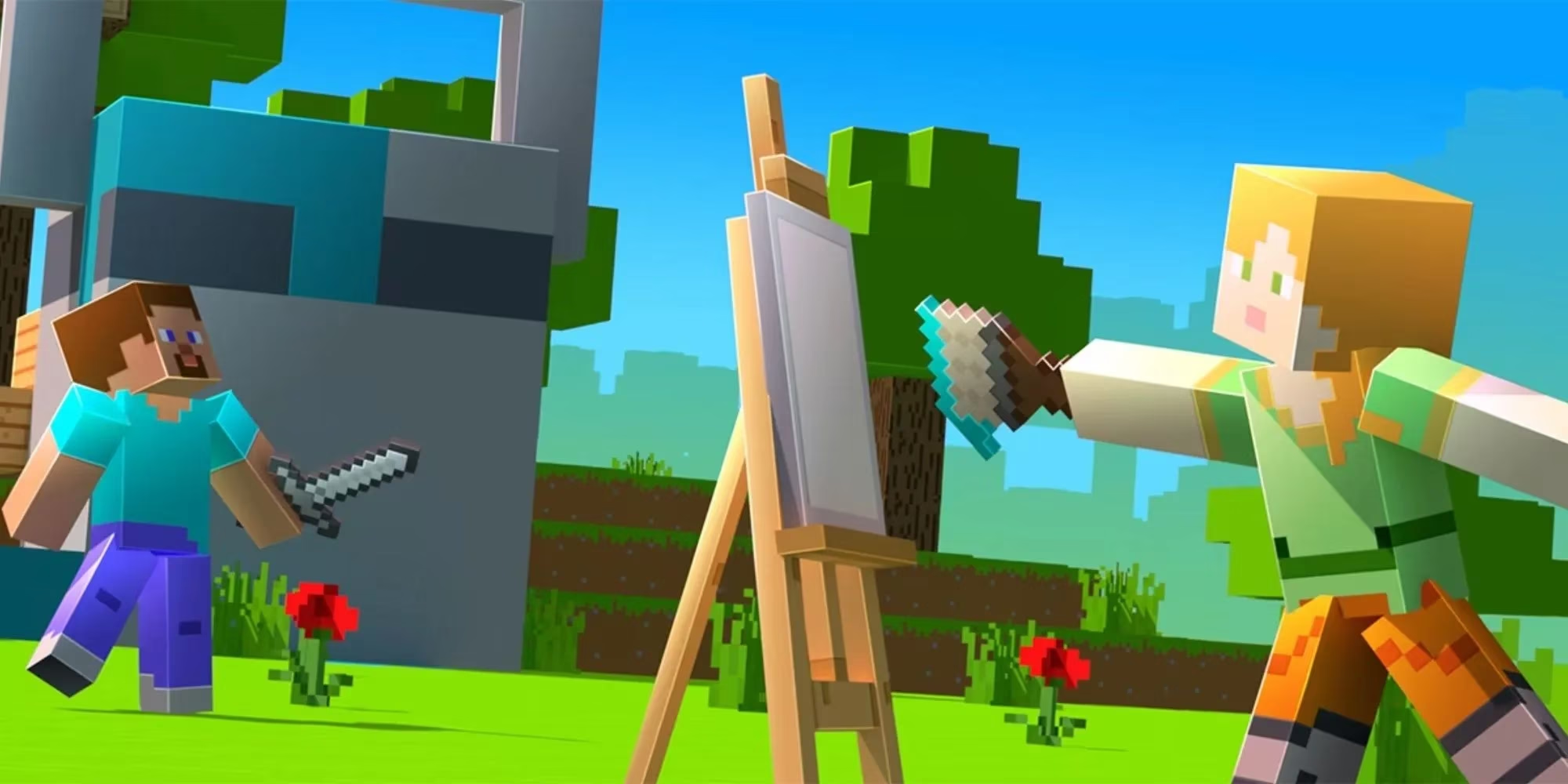
Take Minecraft, the ultimate sandbox of creativity. On the surface, it's a peaceful Zen garden of blocks. But in co-op? It becomes a high-stakes urban planning committee meeting with pickaxes. Arguing over where to build the base is just the warm-up. The real test comes when someone's 'creative rearrangement' of your meticulously crafted castle looks less like renovation and more like a creeper had a stroke. Spending hours mining for diamonds, only to watch a friend accidentally lava-bathe your entire stash, is a feeling of loss more profound than misplacing your car keys—it's like watching a beloved houseplant you nurtured for years get used as football practice. The fallout from such a digital disaster can linger longer than you'd think.
Then we have the arena of competitive shooters. Counter-Strike 2 remains a titan, a game where precision and teamwork are paramount. But that need for perfect sync is also its greatest social pitfall. When a round starts going south, the blame game begins faster than a buy phase. A missed shot isn't just a mistake; in the heat of the moment, it can feel like a personal betrayal of the team's trust. The pressure in these matches can make a team's communication crisp and efficient, or it can shatter it into a million toxic fragments. Playing these games with friends requires a pact: we leave the salt in the game.
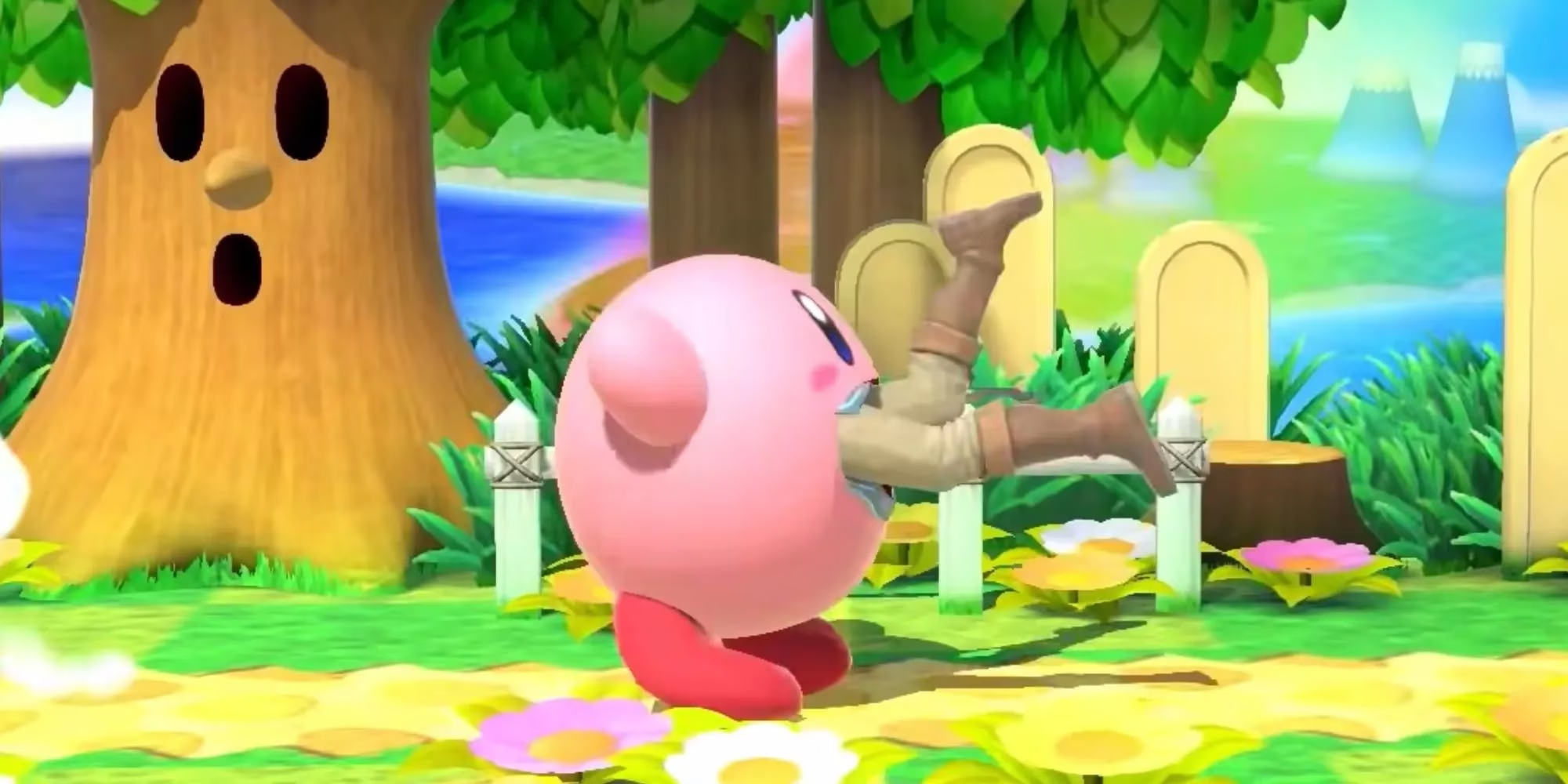
For a more contained, living-room style of conflict, we look to party and fighting games. Super Smash Bros. Ultimate is a beloved chaotic brawl. It's generally balanced, but we all have that one friend who mains a character so infuriatingly evasive (I'm looking at you, Kirby players) that beating them feels less like a victory and more like finally swatting a hyper-intelligent, dancing fly. The items and stage hazards introduce a level of randomness that can turn a skill-based match into a lottery, where the winner is decided not by technique but by who happened to be standing next to the suddenly appearing Super Star. It's friendship chaos, distilled into a few minutes.
Some games bake the conflict right into their core mechanics. Magicka 2, that glorious, spell-slinging chaos simulator, is a masterpiece of cooperative sabotage. The friendly fire isn't a bug; it's the main feature. Experimenting with elemental combinations is a blast—literally. One moment you're combining earth and lightning to shield a friend, the next you've accidentally summoned a localized apocalypse on their head because you sneezed mid-cast. The ensuing retaliation spells turn the battlefield into a glittering, magical fratricidal warzone. It's less a co-op adventure and more like trying to paint a mural with three other people while you're all armed with loaded paintball guns.
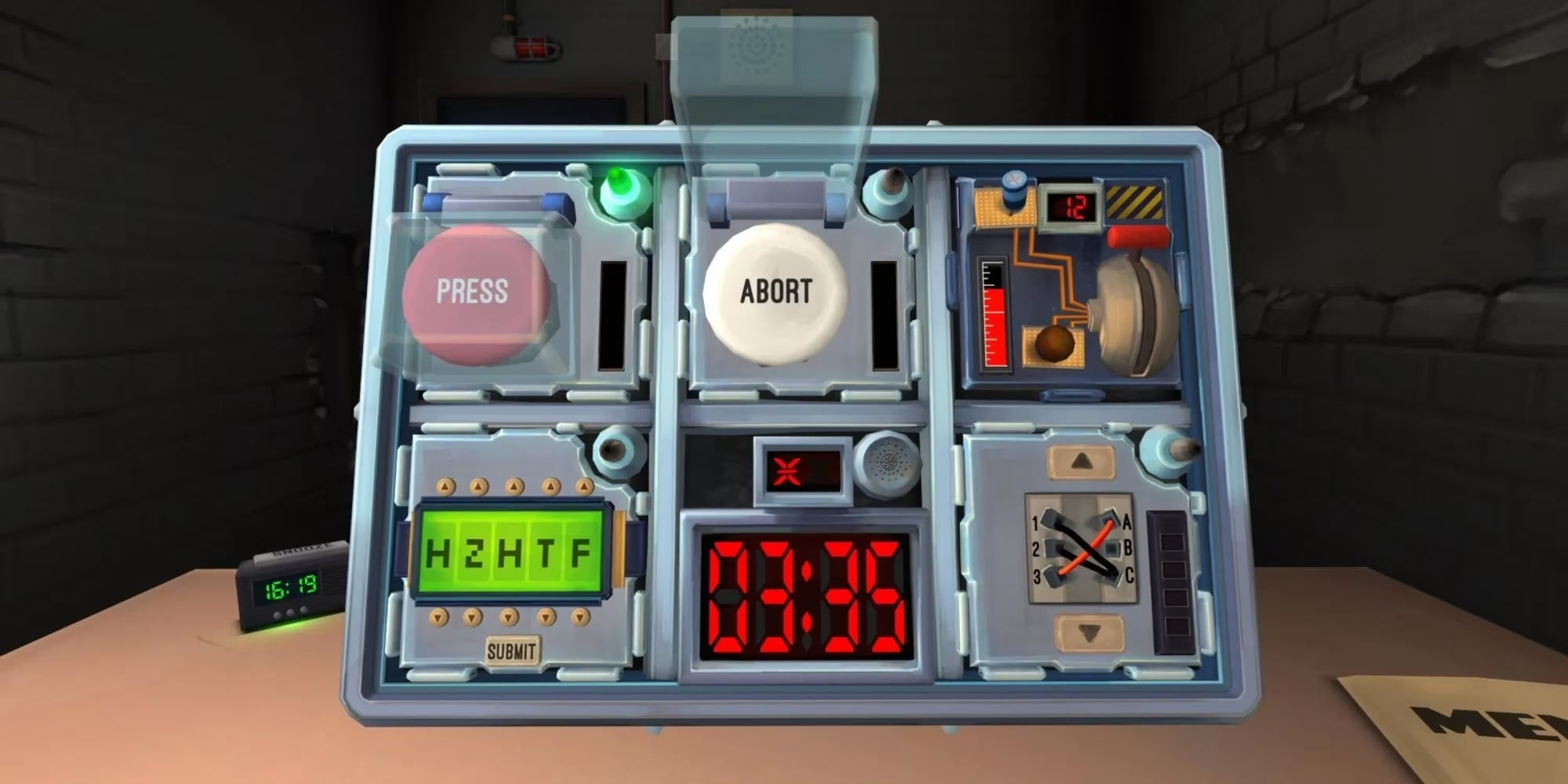
Other games stress-test not your reflexes, but your communication. Keep Talking and Nobody Explodes is a brilliant, anxiety-inducing puzzle. One player is trapped with a complicated, ticking bomb, while the others have the manual but cannot see the screen. The diffuser is screaming about symbols and sequences that sound like alien geometry, while the manual readers are frantically flipping pages, their instructions becoming as clear as a mumbled recipe in a noisy kitchen. The pressure is immense. A single miscommunication—a misheard number, a misidentified wire—leads to a virtual (but emotionally very real) explosion. The post-bomb silence is often louder than the blast itself, filled with the unspoken question: 'Whose fault was that?'
Perhaps the most ironic entry is It Takes Two, a game literally about repairing a broken relationship. For the in-game couple, it's therapy. For the two players controlling them, it's often the opposite. While most of the game requires beautiful, symbiotic cooperation, the developers mischievously scattered competitive mini-games throughout the journey. You'll be working in perfect harmony one minute, and the next you're in a brutal snowball fight or a ruthless game of chess where every captured piece feels personal. It's a jarring, hilarious, and sometimes relationship-reflecting shift in dynamics.
Roguelikes add permanent consequences to the mix. Spelunky 2 is a brutal, beautiful dungeon crawler where a single mistake can end a run. Now multiply that tension by four players. The screen becomes a hectic ballet of arrows, bombs, and jumping bodies. An errant rope can knock a friend into spikes. A well-intentioned shotgun blast to save them might just send them flying into a nest of enemies. And death is not the end! Ghosts can help... or they can haunt their still-living friends, freezing them in place at the worst possible moment. It turns grief into a new, mischievous gameplay layer, probing how much good-natured haunting a friendship can withstand.
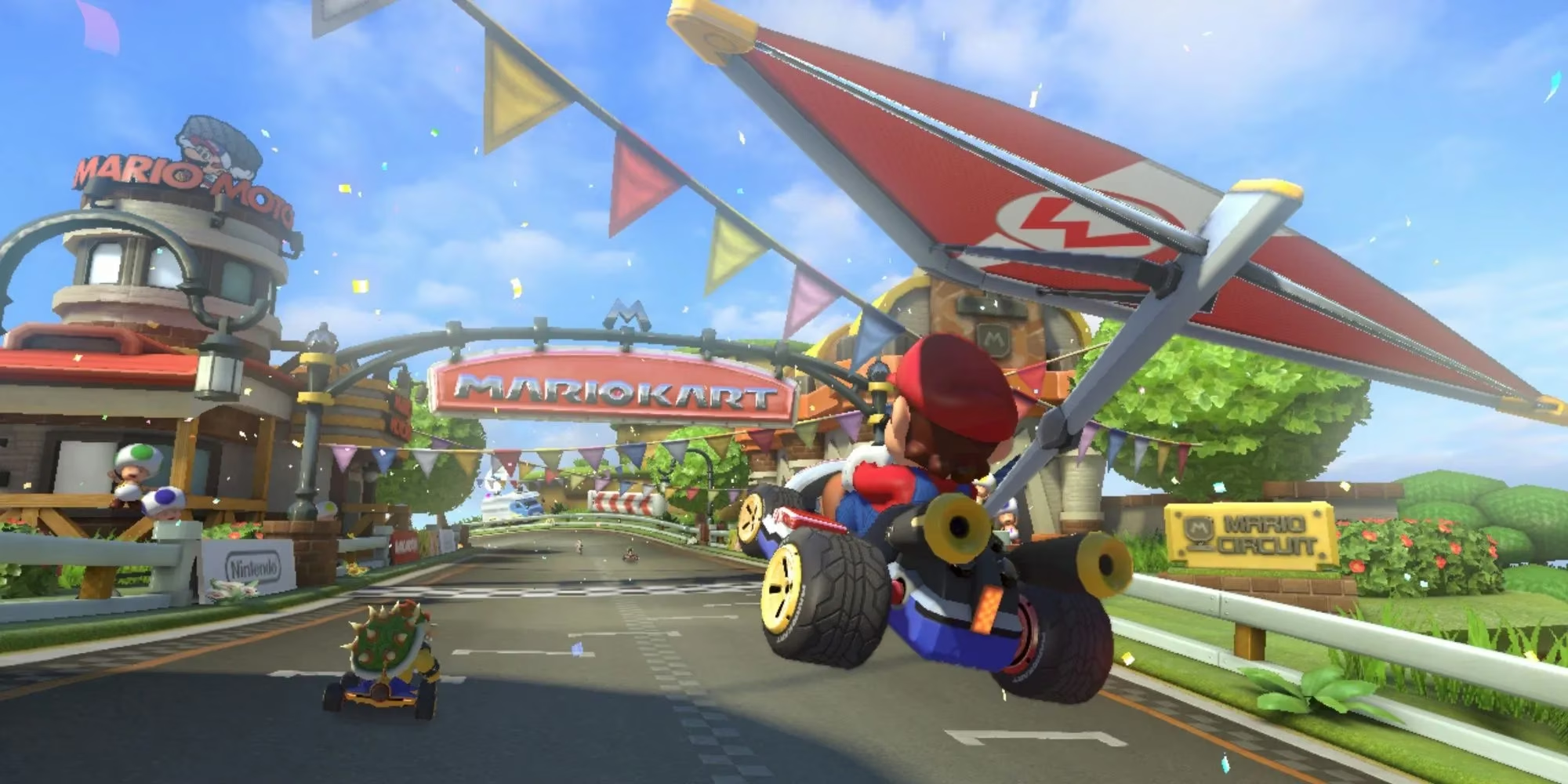
Of course, no list is complete without the king of casual competition: Mario Kart. This game is a masterclass in emotional whiplash. You can be driving a perfect race, feeling like a grand prix champion, only to be hit by a red shell, then a blue shell, then struck by lightning, and finally passed by a bullet bill-ing opponent who was in last place. You go from first to eighth in the span of three seconds. The item system is a glorious, frustrating engine of chaos that ensures no lead is ever safe. The resulting outbursts are a rite of passage. It teaches a valuable, if painful, lesson: in Mario Kart, trust no one, and expect nothing.
Finally, we have the ultimate cooperative pressure cooker: Overcooked 2. This game takes the simple concept of cooking and turns it into a frantic, heart-pounding exercise in logistics and communication under fire. You're not just making soup; you're managing ingredient chopping, cooking, plating, and washing up across a kitchen that might be splitting apart on floating icebergs or shifting on a speeding truck. The chaos is as inevitable as spilled milk. Someone will accidentally throw the last tomato into the void instead of the pan. The rice will burn because everyone thought someone else was watching it. A perfectly good dish will be ruined because a well-meaning friend added fish to a burger order. The kitchen descends into a cacophony of shouted orders and desperate apologies. It’s less a cooking game and more like trying to perform open-heart surgery during an earthquake while your assistants are arguing about the surgical instrument names.
So, what's the verdict? Are these games friendship-killers? Quite the opposite. I believe they are friendship-forgers. Like a blacksmith's tempering process, the heat and pressure of these chaotic, frustrating, and hilarious moments can reveal the strength of your bonds. They teach communication, patience, forgiveness, and how to share a laugh even in defeat. The key is to remember it's all just pixels and code at the end of the night. The real victory isn't on the screen; it's the fact that you can explode, lose, and burn the digital kitchen down together, and still be laughing about it over pizza afterward. Just maybe avoid discussing who really caused that wipe in the dungeon on the drive home.