
League of Legends 2026 Preseason: Analyzing the Best and Worst Changes
League of Legends preseason changes and Riot Games' bold updates deliver fresh, dynamic gameplay, enhancing both balance and player enjoyment.
As a long-time player, I've witnessed countless preseason changes in League of Legends. The game's evolution is a constant, with Riot Games always striving to keep the experience fresh. Now, in 2026, looking back and forward, it's clear that some changes leave a lasting positive impact, while others... well, they make us wonder about the balance team's late-night coffee choices. The core question remains: do these changes ultimately serve the game's health and player enjoyment?
The Triumphs: What Riot Got Right
The Phoenix-Like Return of Chemtech Drake
Remember the old Chemtech drake? It was perhaps one of the most universally panned features in recent memory. Players, pros, and critics alike demanded its removal. So, what did Riot do? They brought it back, but this time, they got it right. The new Chemtech soul feels solid—powerful but not game-breaking, unique without being a gimmick. It fits seamlessly into the drake system that has been a highlight of the game for years.
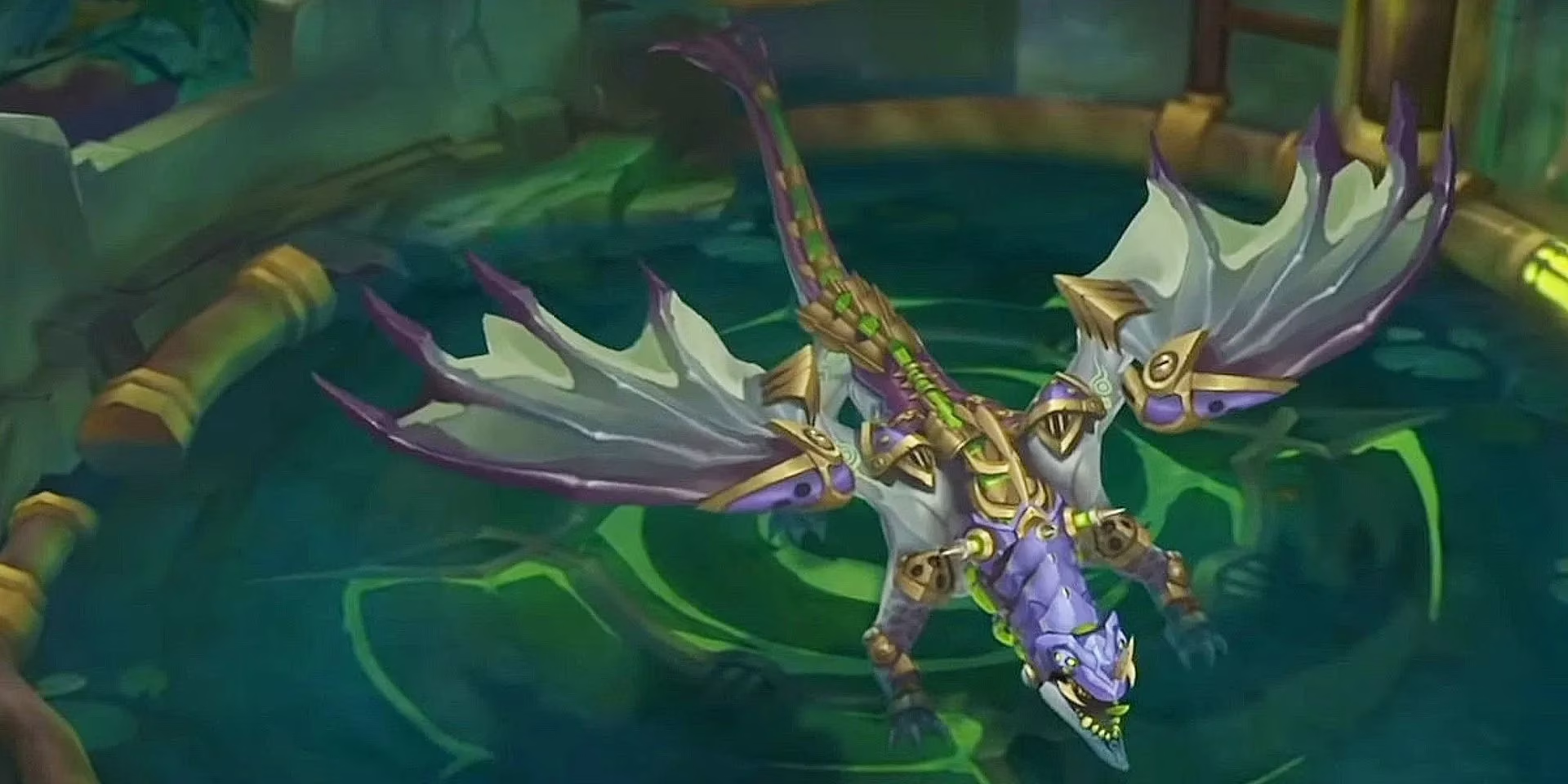
The accompanying map changes are a blast (literally!). Larger blast cones and altered terrain around the jungle pits make skirmishes more dynamic and vision control more strategic. It's a fantastic example of learning from past mistakes and delivering a feature that enhances, rather than frustrates, the core gameplay. Isn't that what we all want from iterative design?
Communication Evolution: Pings and Beyond
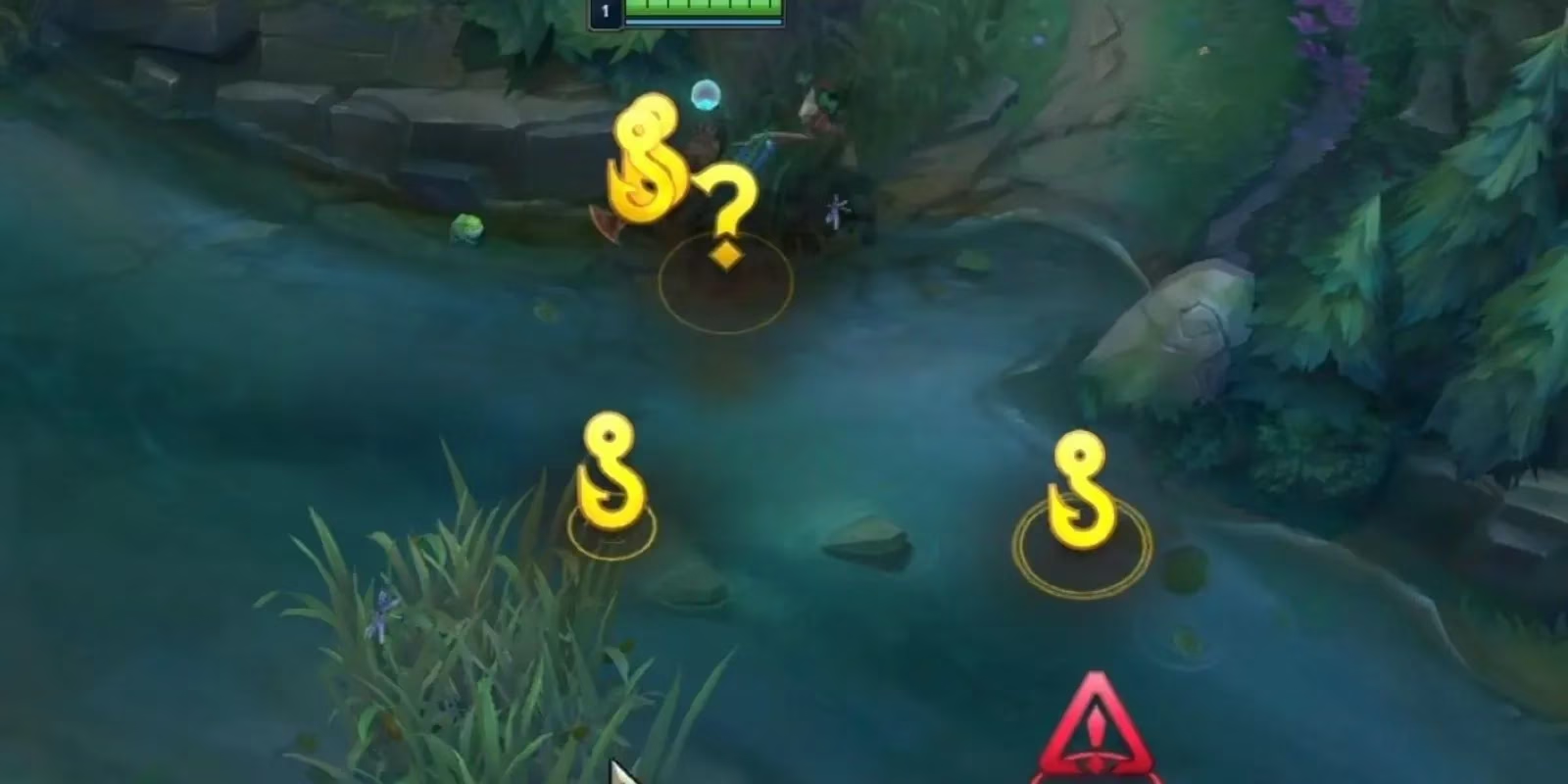
While the dream of integrated voice chat remains just that for many, the expansion of the ping system was a masterstroke. In a team-based game where coordination is everything, providing more granular tools for silent communication is always a win. The new pings have given players ways to convey complex strategies and intentions with a simple click. Objective voting might still need some polish, but this is undoubtedly a step in the right direction for reducing solo queue frustration.
Jungle Revolution: Pets and Quality of Life
The shift from traditional jungle items to adorable (and deadly) pets was a bold, colorful, and largely successful revolution. This change did more than just alter the inventory; it allowed junglers to specialize their playstyle from the very first clear. Do you want to be a dueling skirmisher, a ganking menace, or a farming powerhouse? Your pet choice helps define that.
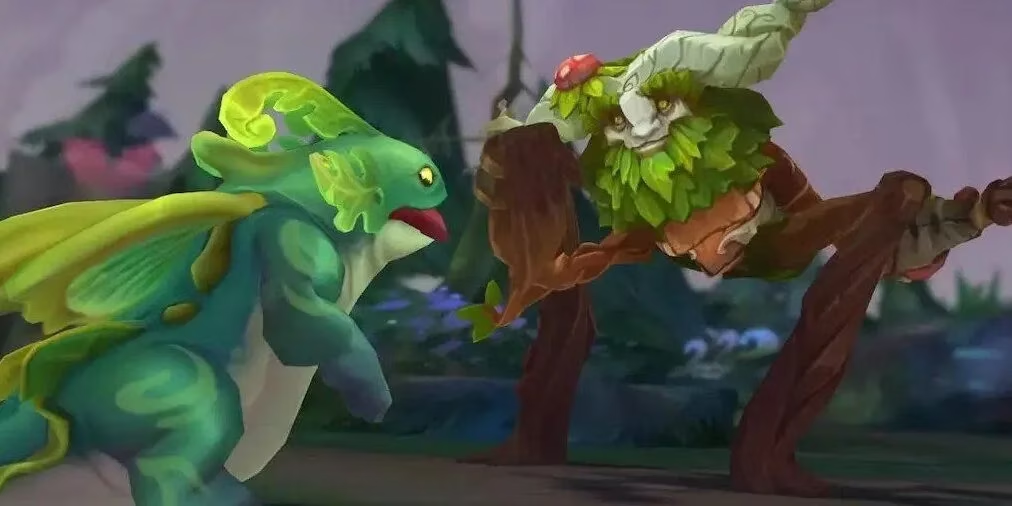
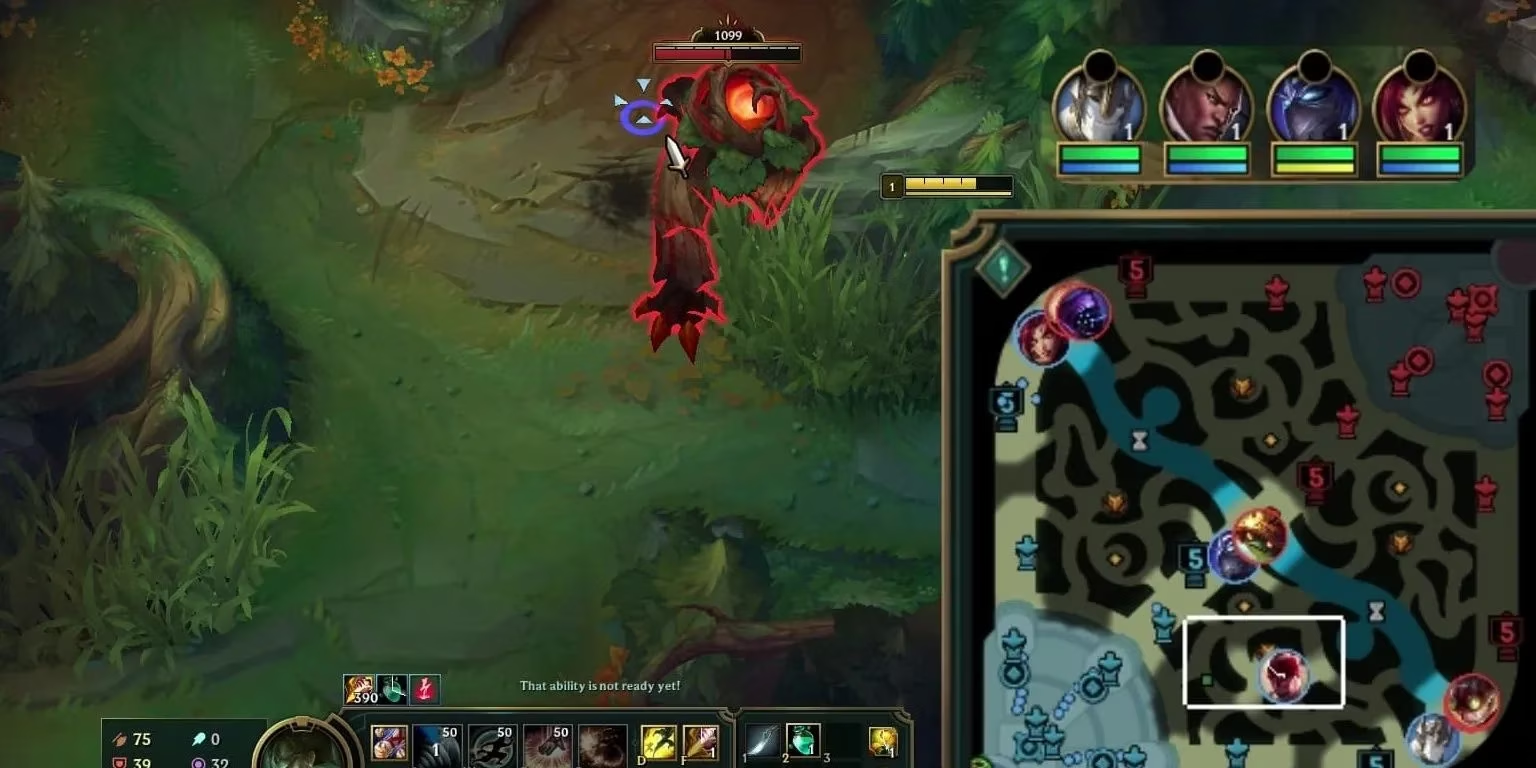
Furthermore, the quality-of-life changes for the role have been tremendous. The new interface, clear camp timers, and suggested pathing recommendations have made the jungle more approachable for newcomers. Since many veterans used third-party apps for this information anyway, integrating it levels the playing field in a healthy way.
A Meta Shift: Empowering Mages and Tanks
For seasons, mage players lamented their cookie-cutter item builds. The focus on expanding and revitalizing mage and tank mythic items was a breath of fresh air. Champions like Ryze and Kassadin finally had tools that felt tailored to them. Similarly, giving tanks more relevant and impactful items promised to shake up a meta often dominated by bruisers and assassins. This philosophical shift towards greater class identity and build diversity was widely celebrated.
The Stumbles: Where the Preseason Fumbled
The Great Jungle Simplification
Here lies the paradox. While the pets and QoL changes were great, Riot's efforts to make jungling "easier" went too far. The jungle is meant to be the most demanding role—a test of map awareness, pathing efficiency, and risk management. By nerfing leash ranges and reducing camp damage, they stripped away much of the role's skill expression. What's the point of mastering kiting techniques on champions like Kindred if the camps barely fight back?
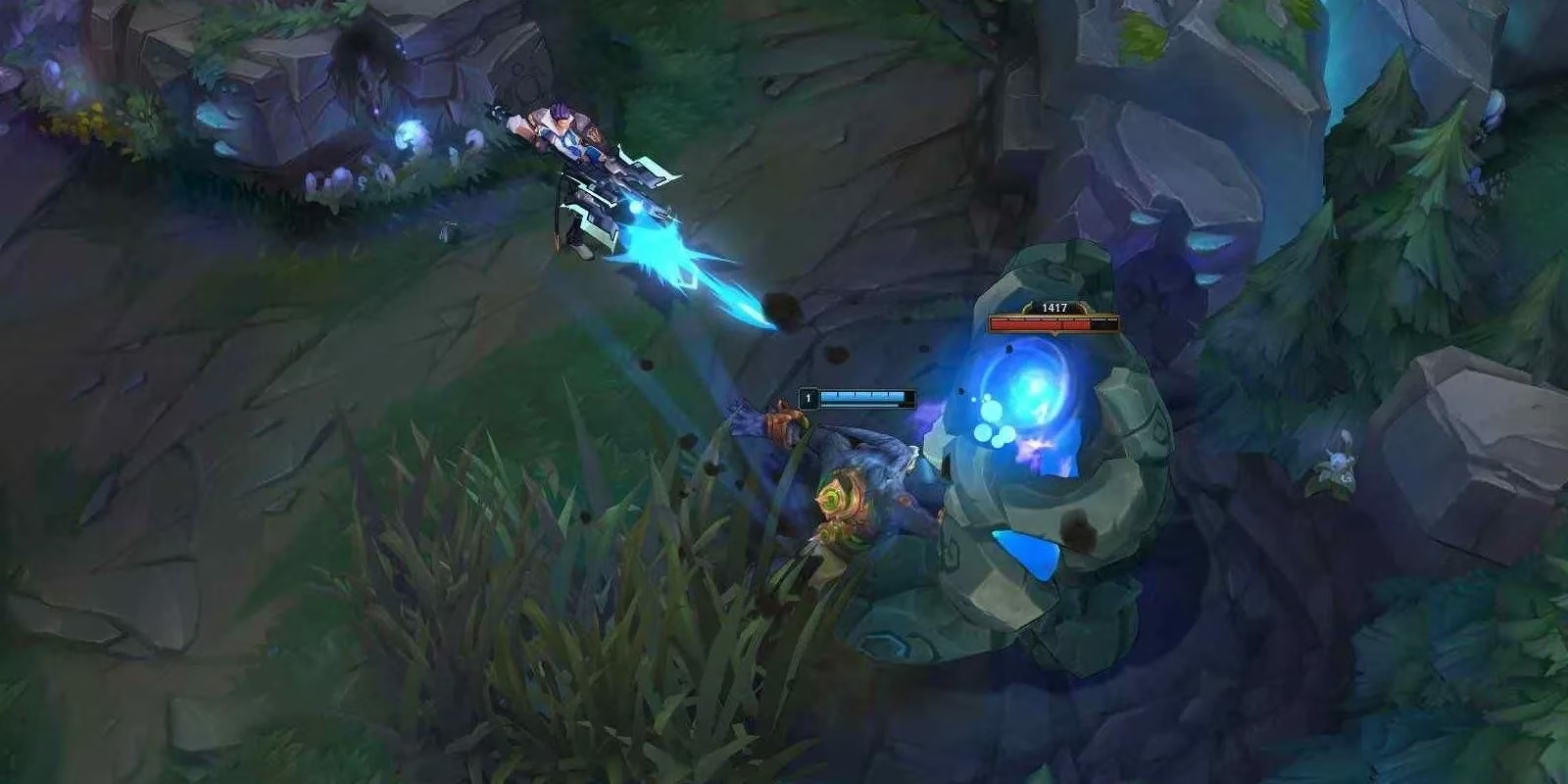
The result? Junglers emerged from their first clear at near-full health, ready to gank with no meaningful trade-off. For laners, it felt oppressive. The balance between making a role accessible and preserving its high-skill ceiling is delicate, and this time, the scales tipped too far towards simplicity.
Item Imbalance: Jak'Sho and Ravenous Hydra Domination
Oh, the items. Every preseason has its problematic releases, but Jak'Sho, The Protean and the reworked Ravenous Hydra defined an era of frustration. Jak'Sho was so universally powerful that it made dedicated tank items seem obsolete. Why build a proper tank mythic when a bruiser could build Jak'Sho and become nearly unkillable while still dealing massive damage?
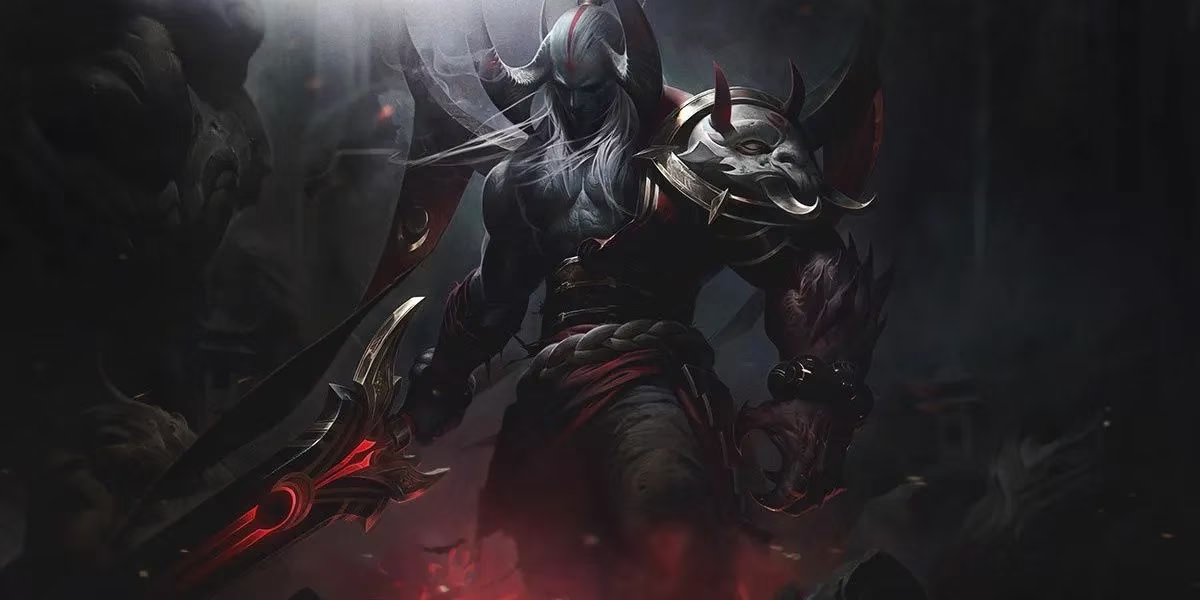
Ravenous Hydra lost its entire identity as a split-pushing wave-clear item and became a stat-stick must-buy on every single AD champion, from assassins to marksmen. These items warped the meta around themselves, stifling build diversity they were meant to create. Despite multiple rounds of adjustments, their initial impact showcased a significant oversight in testing.
The Bruiser Supremacy Problem
This leads directly to the overarching issue: the Bruiser Class Supremacy. With access to overpowered items like Jak'Sho and Hydra, bruisers like Aatrox, Fiora, and Camille achieved a state of near-perfection. They out-damaged assassins and out-tanked dedicated tanks. Where was the weakness? Where was the counterplay? The problem wasn't just the items, but how certain champion kits interacted with them, creating a perfect storm of imbalance that took months to properly address.
The Enduring Enigma of Yuumi
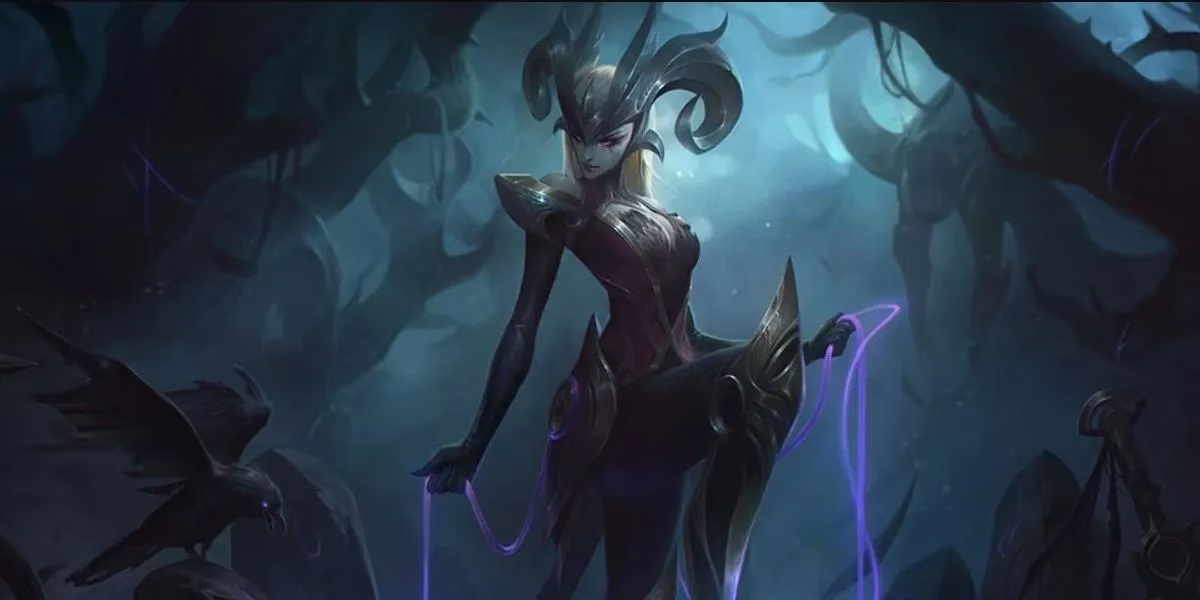
And then, there's Yuumi. Years later, she remains the champion design team's white whale. Her fundamental design—being permanently attached to an ally—creates a binary experience. She's either a stat-boosting monster that dictates the game or a useless accessory. Her gameplay is often criticized as non-interactive and low-effort, which breeds resentment among the player base.

Riot's promises of reworks have come and gone, but the core frustration persists. In a genre built on interaction and skill expression, Yuumi's design philosophy often feels at odds with the rest of the game. Will 2026 finally be the year she finds a healthy place in the game? Many players, myself included, remain skeptical.
Looking Forward: The Legacy of the Preseason
So, what's the verdict? The preseason was a mix of brilliant innovation and perplexing missteps. The successes—the revived Chemtech Drake, the improved communication tools, the jungle pets—show a Riot capable of listening and creating engaging new systems. They demonstrate a commitment to refreshing the game's landscape.
However, the failures—the over-simplified jungle, the item imbalances, the enduring bruiser and Yuumi problems—highlight the immense difficulty of balancing a live-service game with over 160 champions. They remind us that every change creates a ripple effect across the entire ecosystem.
As we stand in 2026, the lessons from this preseason are clear:
-
Innovation is good, but stability is crucial. Drastic changes need extensive testing.
-
Class identity matters. Items should empower specific playstyles, not create omnipotent builds.
-
Skill expression must be preserved. Making roles accessible shouldn't mean making them simplistic.
League of Legends continues to be a living, breathing game. Its preseason patches are the heartbeat of its evolution—sometimes strong and steady, sometimes arrhythmic. But it's this constant cycle of change, feedback, and adjustment that has kept millions of us logging in for over a decade. The journey, with all its highs and lows, is still the point.