
League of Legends Esports in 2026: A New Era of Competition, Legends, and Spectacle
League of Legends esports and LCK dominance drive global excitement, with innovative formats and fierce rivalries shaping a thrilling 2026 scene.
The digital coliseum of League of Legends esports continues to be a global phenomenon, captivating millions who tune in to witness the pinnacle of strategic combat and mechanical prowess. As we navigate 2026, the landscape has evolved, building upon the foundational shifts of recent years to deliver a viewing experience more thrilling and unpredictable than ever. The professional scene remains a vibrant ecosystem of regional rivalries, superstar narratives, and constant innovation, ensuring that every match feels like a chapter in an ongoing epic saga.
The Reign of the LCK and the Quest for Continued Supremacy
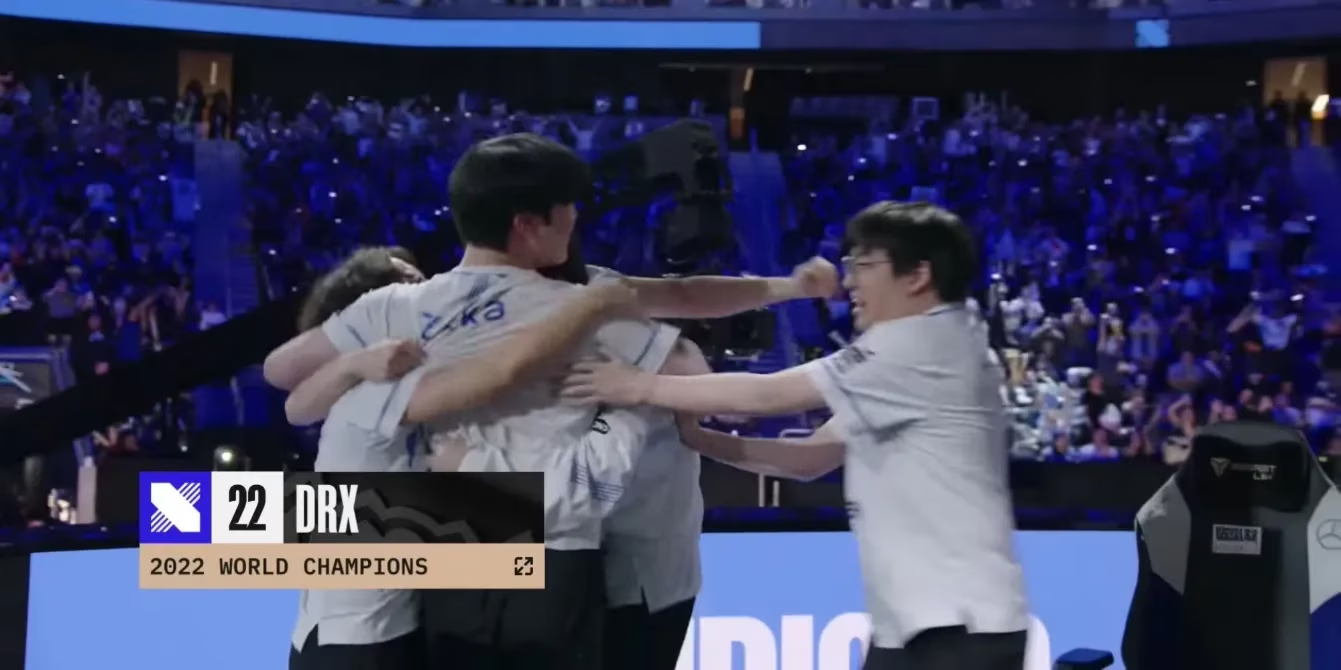
The echoes of Korean dominance from the early 2020s have solidified into a structured dynasty. Following the legendary underdog run of DRX, the LCK has meticulously refined its approach, becoming a powerhouse region synonymous with tactical discipline and individual excellence. The league's adaptation of a double-elimination playoff bracket, introduced years prior, has become a gold standard, consistently delivering high-stakes, marathon series that separate the truly great from the merely good. While the MSI trophy has found a more permanent home in the LCK cabinet in recent years, the hunger for international glory at the World Championship remains insatiable. The region's famed talent pipeline continues to churn out prodigies, with each new season introducing rookies eager to dethrone the established monarchs of the mid-lane and jungle. The narrative is no longer about reclaiming dominance, but about sustaining an empire against a world of formidable challengers.
The LEC's Revolutionary Format: Chaos as a Feature, Not a Bug
The European league's bold experiment with a three-split, multi-stage format has fully matured, transforming the LEC into the most volatile and entertaining league to watch week-to-week. The reduction of best-of-one matches in favor of more decisive series has been a resounding success. The format creates a relentless pressure cooker where teams must perform consistently across multiple round-robin and knockout stages just to qualify for the international events. This structure has given rise to incredible Cinderella stories and shocking collapses, keeping fans on the edge of their seats. The ecosystem itself has seen seismic shifts since the entrance of organizations like KOI, which brought a tidal wave of passionate fandom. The player movement between splits remains frenetic, making pre-season predictions a fool's errand and ensuring the competitive hierarchy is in a constant, beautiful state of flux.
The LPL's Colossal Crucible: Where Titans are Forged
The League of Legends Pro League (LPL) remains the undisputed behemoth in terms of scale and depth of competition. The seventeen-team gauntlet is a brutal, season-long trial by fire. It's a league where a single lost teamfight can cascade into missing the playoffs entirely, and where new super-teams are assembled every offseason with staggering ambition. The region's philosophy of aggressive, skirmish-heavy play has influenced the global meta, forcing every other league to adapt or be overwhelmed. While international results have ebbed and flowed, the domestic league is an unparalleled spectacle of mechanical virtuosity and strategic daring. The 2026 season sees legacy world champion rosters reformed and new dynasties attempting to rise, all within the most chaotic and competitive environment in all of esports. To win the LPL is to prove you can survive a war of attrition against the world's deepest talent pool.
The Return of the Kings and the Rise of New Icons
The player-centric narrative of LoL esports has only intensified. The triumphant returns of legends like Doublelift and Rekkles in the mid-2020s set a precedent, proving that legacy and narrative power are intangible assets. In 2026, the spotlight shines on a new generation of superstars who have grown up watching these icons, alongside veterans who have adapted their game across multiple meta revolutions.
| Player Archetype | 2026 Example | Impact |
|---|---|---|
| The Returning Legend | A former world champion coming out of retirement for one last shot. | Generates massive hype and viewership for their team. |
| The Rookie Prodigy | A 17-year-old solo queue sensation dominating their first LPL split. | Injects new playstyles and becomes an instant fan favorite. |
| The Region-Hopper | A star player bringing their expertise to a new league (e.g., LCK to LCS). | Elevates the competitive level of their new region. |
| The Streamer-Superstar | A player with a colossal personal brand rivaling their team's. | Blurs the line between pro play and content, expanding the audience. |
These individuals are not just athletes; they are influencers, streamers, and protagonists in a global story. Their transfers, retirements, and comebacks generate seismic waves across the community, reminding everyone that while teams win championships, it's the players who capture imaginations.

Champions: The Ever-Evolving Arsenal of Pro Play
The champion pool is the canvas upon which pros paint their masterpieces, and in 2026, that canvas is more dynamic than ever. The comprehensive rework system for older champions has been a game-changer. We've seen champions like Udyr and Aurelion Sol completely reinvented, going from niche picks to meta-defining powerhouses that demand specific draft answers. New champion releases, like the formidable Vanguard from Ixtal or the enigmatic Weaver from the Spirit Realm, are instantly thrown into the professional crucible. Teams spend countless hours in scrims unlocking these champions' potential, leading to breathtaking, never-before-seen compositions during major tournaments. A simple mid-patch adjustment can resurrect a forgotten champion, causing a ripple effect through draft strategies worldwide. Watching the best players in the world pioneer a new build or a revolutionary way to use an ultimate ability is a core thrill of the modern esports experience.
The Global Stage: MSI & Worlds in the Modern Era
The crown jewels of the competitive calendar, the Mid-Season Invitational and the World Championship, have undergone the transformative changes fans clamored for. Riot's commitment to format evolution has paid dividends. The tournaments now feature extended play-in stages with double-elimination elements, more best-of-five series between major regions earlier in the event, and innovative group stage formats that minimize the chance of meaningless matches. The result? More high-stakes clashes between the LCK's strategic mastery, the LPL's relentless aggression, and the LEC's creative chaos. The narrative of international competition is richer, allowing for deeper rivalries to develop and for true underdog stories to have the stage time needed to capture the world's heart. The 2025 World Championship finals, held in a sold-out Olympic stadium, broke all previous viewership records, proving that the appetite for this refined, global clash is stronger than ever.
In conclusion, League of Legends esports in 2026 is a testament to sustainable growth and passionate innovation. It's a world where :crown: historic regions defend their legacies, :european_castle: revolutionary formats breed chaos, :fire: colossal leagues test endurance, :bust_in_silhouette: player stories captivate millions, :crossed_swords: an ever-changing champion meta demands adaptation, and :globe_with_meridians: global tournaments deliver unforgettable spectacle. The game is more than a decade old, but its competitive heartbeat has never been stronger, promising every fan that the next epic play, the next shocking upset, and the next legendary dynasty is always just one patch, one transfer, or one tournament away.