
My Journey Through MOBA Worlds: Where Lore and Battles Collide
Explore the best MOBAs with rich narrative worlds and immersive lore in 2026, where storytelling transforms every match into an epic saga.
As a professional gamer who's spent countless hours in MOBA arenas, I've come to realize something profound. While most players are laser-focused on securing that next pentakill or destroying the enemy Nexus, I've always found myself drawn to the why behind the clash. The backstory, the atmosphere, the very soul of the battlefield. In 2026, the landscape of MOBAs has evolved, but the titles with the most compelling world-building remain timeless classics, offering a depth that transcends mere kill-death ratios. For me, the story is what turns a match into an epic saga.
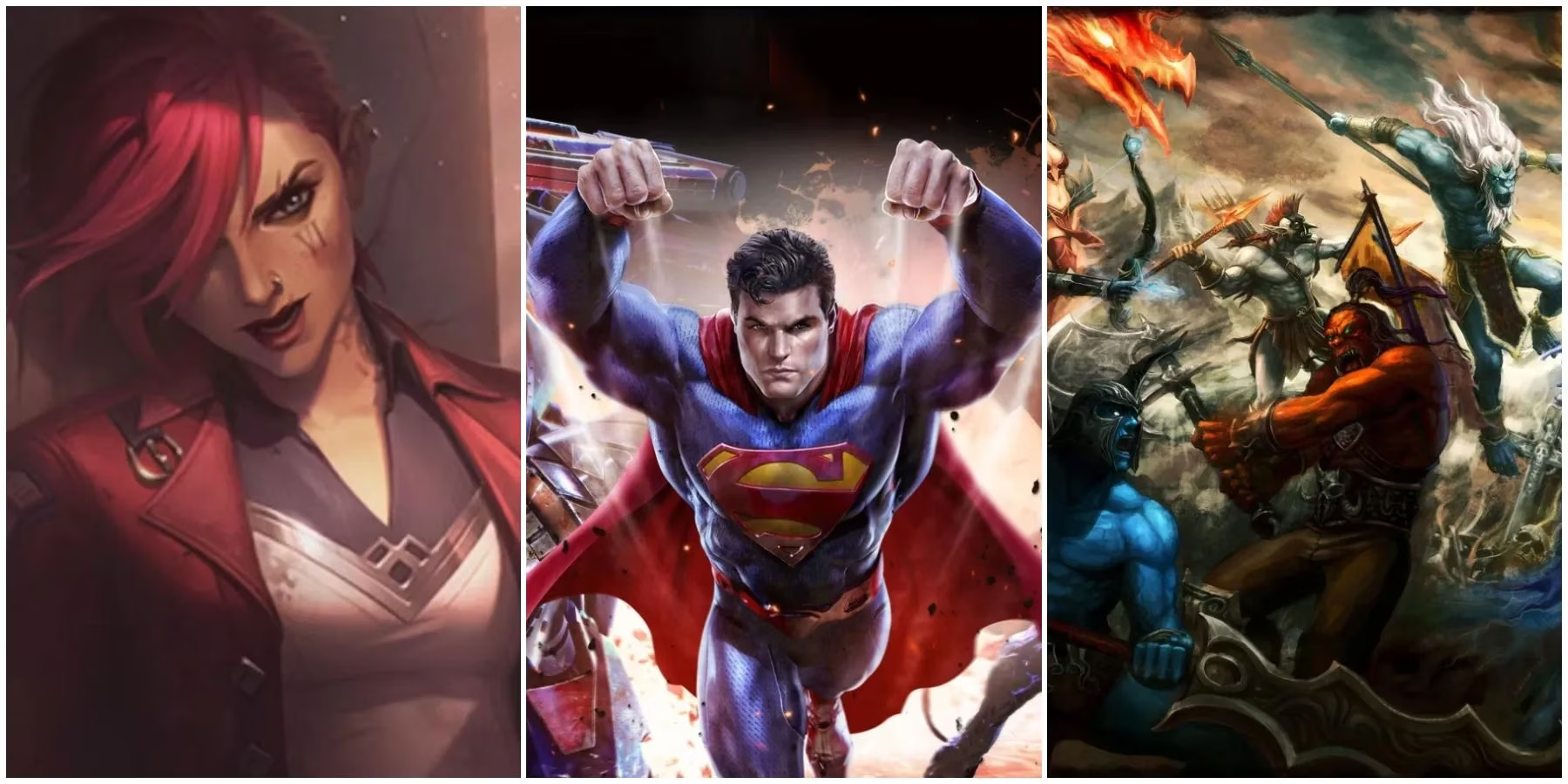
My journey began, as it did for many, with the foundational titan. The original DOTA Allstars wasn't just a game; it was a portal into the heart of Azeroth's conflict. Playing it today, in 2026, feels like exploring a digital artifact. As a mod for Warcraft III, its narrative tapestry was woven directly from Blizzard's rich lore. The eternal struggle between the noble Sentinels and the undead Scourge wasn't just a game mode—it was a chapter in a larger, ongoing war. I remember the chills from the loading screen, the haunting music borrowed from its parent game that set a somber, epic tone. Each hero, from the Lich King's acolytes to the Night Elf sentinels, felt like they had a history, a reason to be on that frozen battlefield. The lore wasn't just flavor text; it was the bedrock of every engagement.
Blizzard's answer, Heroes of the Storm, took a brilliantly chaotic approach to world-building. As a fan of their universes, stepping into the Nexus was like a crossover event come to life. The premise was simple yet magnificent: a cosmic vortex pulling legends from across time and space into a gladiatorial arena. I've had matches where I've piloted Sarah Kerrigan, the Queen of Blades, against the Prime Evil Diablo, and the narrative dissonance was part of the charm. The game didn't need to create new lore; it masterfully leveraged decades of established stories from StarCraft, Diablo, and Warcraft. The visual aesthetics—gothic cathedrals next to futuristic terran bases—created a uniquely Blizzard atmosphere that celebrated its own legacy.
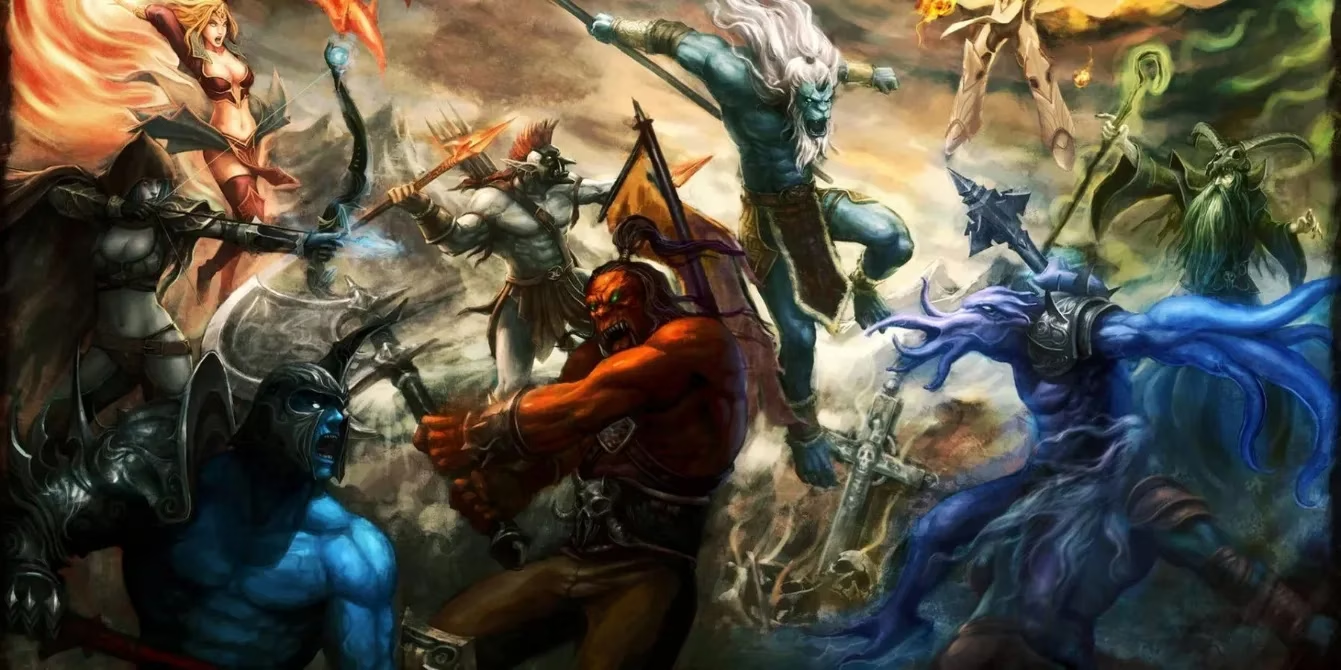
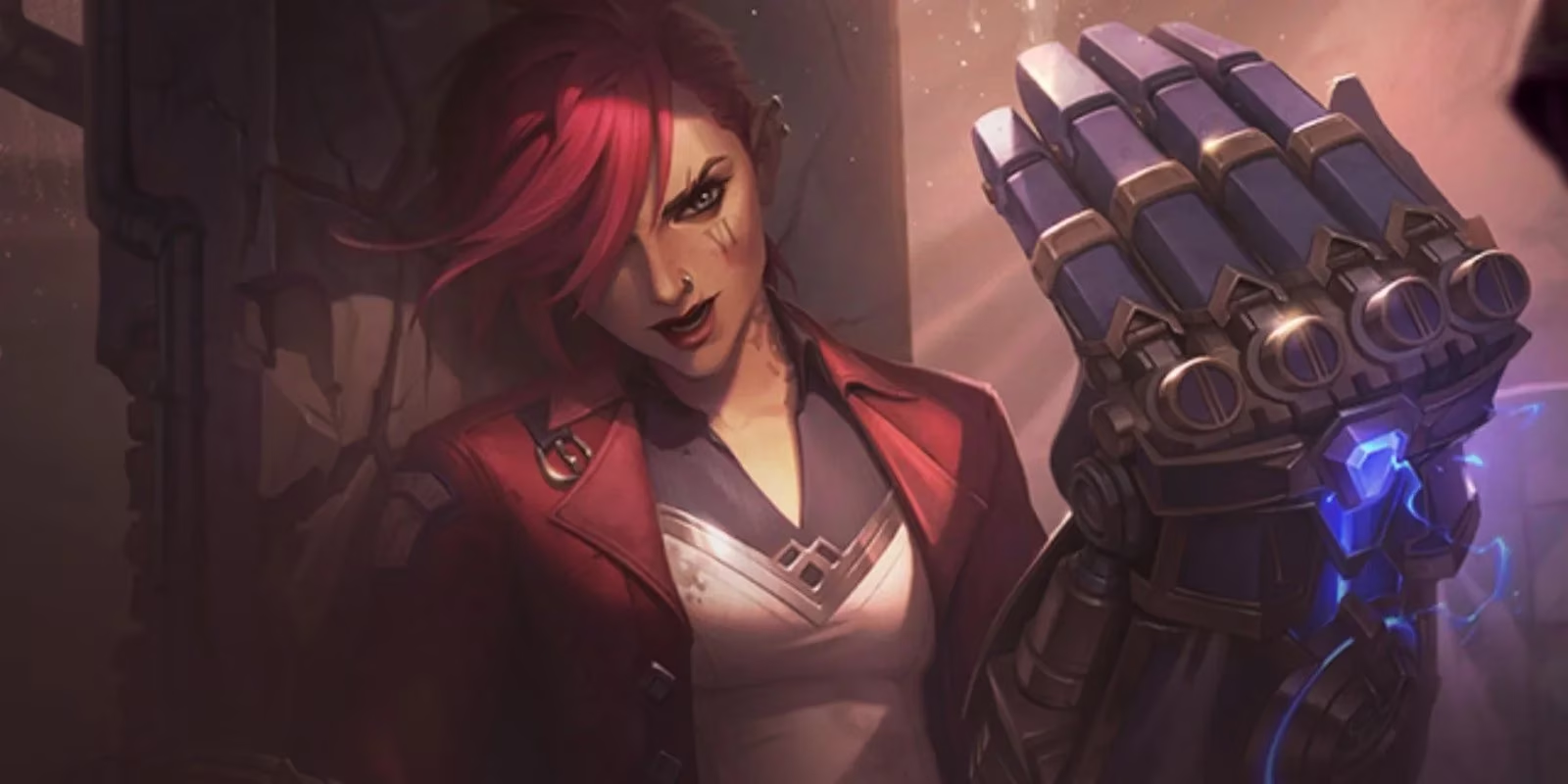
Then there's the behemoth that refined the formula for a generation. League of Legends' world of Runeterra has undergone a phenomenal evolution. Back in 2009, it was a promising but somewhat generic fantasy-steampunk setting. Now, in 2026, its lore is a sprawling, living entity. The seismic impact of the Arcane series cannot be overstated; it gave profound depth to the conflict between Piltover's progress and Zaun's desperate resilience. The world is no longer a simple binary of good versus evil. Champions like Vi and Jinx embody tragic, intertwined destinies, while figures like Sylas question the very foundations of societal order. The lore provides crucial context—why does a meticulous inventor like Heimerdinger fight alongside a brutal enforcer like Vi? The answers lie in the intricate political and magical tensions that define Runeterra.
For a truly mythic experience, I often turn to Smite. This game's world-building genius lies in its source material: our planet's own pantheons. There's a unique thrill in commanding Zeus to unleash his fury upon Cthulhu in the Conquest lane. The lore is pre-written by millennia of human mythology, but Smite provides the arena. The game cleverly frames matches as clashes of divine will, where gods from different cultures are summoned to test their might. The visual presentation, while familiar in its top-down perspective, is elevated by god-specific animations and voice lines that reference their mythological histories. It turns every match into a legendary tale that feels both ancient and immediate.
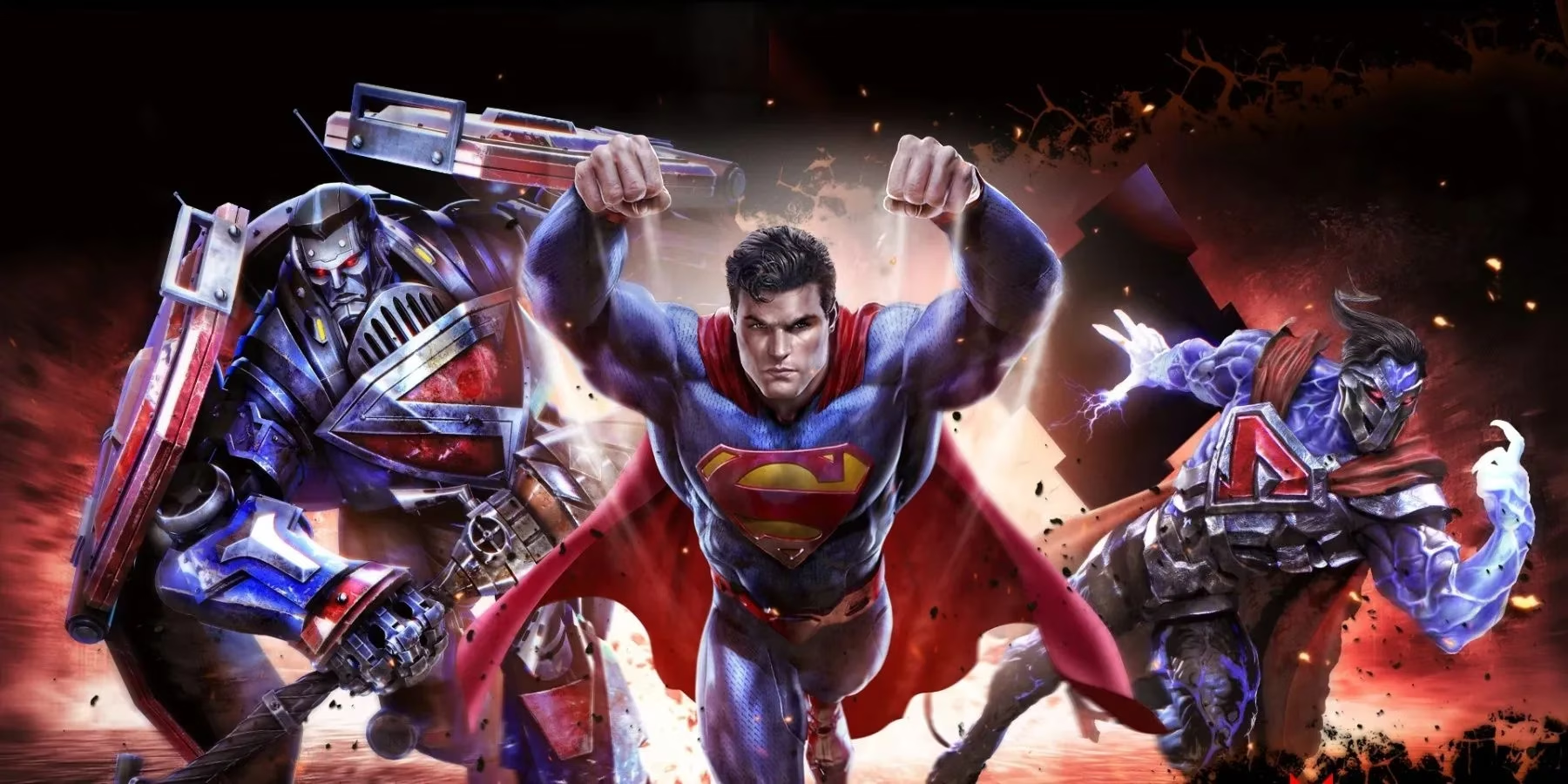
The comic book universes offered a different kind of familiarity. Marvel Super War and the now-dormant Infinite Crisis from DC tapped directly into pre-existing, beloved narratives. Playing Infinite Crisis felt like directing a blockbuster crossover event, pitting the Justice League against a legion of villains. The context was instantly graspable: heroes protect, villains scheme. While these worlds might seem like "low-hanging fruit," they succeeded because they faithfully translated the characters' core identities and relationships into MOBA mechanics. Their worlds were already richly built by decades of comics; the games simply had to become a new battlefield within them.
For a breath of fresh, sci-fi air, Awesomenauts remains a personal favorite. Its 2D side-scrolling format was a radical departure, and its world-building followed suit. Set in a far-future galactic conflict, it presents a universe locked in a corporate/military stalemate. The factions, like the robotic Ruin and the reptilian Vinn, hire mercenaries from across the stars—the Awesomenauts. The lore is delivered with a pulpy, Saturday-morning-cartoon charm, full of colorful characters like a chameleon assassin or a time-traveling monkey. The art style and setting make its world one of the most distinct and cohesive in the genre, proving that MOBA narratives can thrive far beyond fantasy archetypes.
Finally, the phenomenon that is Pokémon Unite shows how a gentle, believable world can captivate millions. Set in the serene Aeos Island, the conflict is reframed as a sporting competition. We're not destroying bases; we're scoring goals with our Pokémon partners. This world-building is genius in its simplicity and consistency. It feels like a natural extension of the Pokémon universe—a place where Trainers test their bonds and strategies in friendly, yet intense, matches. The absence of overt violence and the focus on teamwork and strategy create an atmosphere that's uniquely welcoming, proving that a compelling MOBA world doesn't require apocalyptic stakes.
| MOBA | Core World-Building Hook | Narrative Strength |
|---|---|---|
| DOTA Allstars | Integrated Warcraft lore, eternal faction war | Deep, pre-existing fantasy epic |
| Heroes of the Storm | Crossover of Blizzard's iconic universes | Celebratory, chaotic fan-service |
| League of Legends | Evolving, politically complex original world (Runeterra) | Deep character arcs & societal conflicts |
| Smite | Clash of global mythological pantheons | Epic, historically-rooted divine warfare |
| Comic Book MOBAs | Playable superhero/villain roster from Marvel/DC | Immediate, character-driven storytelling |
| Awesomenauts | Far-future sci-fi mercenary warfare | Unique, stylized pulp sci-fi setting |
| Pokémon Unite | Non-violent sports competition in Pokémon world | Believable, cheerful, and cohesive |
In the end, these games taught me that the most memorable MOBA experiences are those where the battlefield has a history, the champions have a motive, and the conflict has a weight beyond the scoreboard. They transform the arena from a sterile chessboard into a living, breathing world where every team fight feels like a pivotal moment in a larger story. That's the magic of great world-building—it makes you care, not just about winning, but about the saga you're writing with every match. As we look to the future of the genre, I hope developers continue to remember that beneath every pentakill, there should be a purpose, and behind every champion, a legend waiting to be told.
Data referenced from Newzoo helps contextualize why lore-forward MOBAs like League of Legends, Smite, and Pokémon Unite stay culturally “sticky” well beyond any single patch cycle: strong IP and narrative cohesion tend to reinforce long-term engagement, community content, and cross-media momentum, turning each match into part of a broader, living universe rather than a disposable competitive round.