
My Journey to Mastering Vision: The Art and Soul of Warding in Dota 2
Master the essential Dota 2 warding strategies and vision control techniques to dominate the information war, transforming your gameplay from reactive to strategically dominant.
I remember the first time I truly understood the power of a simple, glowing ward. It was 2026, and I was stuck in a seemingly endless cycle of losses, feeling like my hero's strength was all that mattered. Then, a single observer ward placed on a cliff near the Roshan pit changed everything. It wasn't just about seeing; it was about knowing. That tiny beacon of light revealed the enemy team's entire plan, turning a potential disaster into a game-winning team fight. From that moment, I realized that Dota 2 isn't just a battle of reflexes and items; it's a war of information, and warding is your most potent weapon.

For years, I labored under the misconception that only the support heroes, the unsung heroes in the background, were responsible for this crucial task. I was so wrong. In the modern Dota 2 landscape of 2026, vision is everyone's responsibility. Sure, supports often handle the bulk of it, but any player, from the hard-hitting carry to the roaming initiator, can and should contribute to the vision game. The shop at the base offers two fundamental tools for this information war, and understanding their distinct roles was my first real lesson.
The Two Pillars of Vision:
-
Observer Wards: My trusty scouts. They cost no gold and provide a generous 1600 units of vision for six precious minutes. They are the eyes of the team.
-
Sentry Wards: My secret weapon against deception. For 50 gold, they reveal invisible units and enemy wards within a 1000 radius, also lasting six minutes. They are the truth-seekers.
Simply placing them wasn't enough. I had to learn the where and the why. I started to see the map not as a static battlefield, but as a dynamic landscape of opportunity and danger, where a well-placed ward could dictate the flow of the entire game.
The Strategic Map: Where to Plant Your Knowledge
My journey involved internalizing key ward locations for different phases of the game. It became a mental checklist:
Early to Mid-Game Security & Aggression:
-
Cliff Wards in our Jungle: Placing an observer on the high ground cliffs in our own top and bottom jungles became second nature. This created a safe farming zone for our core heroes, alerting us to incoming ganks long before they happened. The peace of mind this provided was invaluable.
-
Enemy Jungle Infiltration: I learned to be bold. Dropping a sentry and an observer deep in the enemy jungle not only de-warded their vision but also let us ambush their farmers. It shifted the pressure onto them.
-
Rune Control: The bounty rune spots and the power-up rune locations near the mid-lane became prime real estate. A ward here often meant securing a crucial economic or combat advantage for our midlaner.
The Roshan Dance & Base Play:
As games progressed, the objective focus shifted, and so did my warding priorities.
-
The Roshan Pit Area: This is arguably the most critical vision zone post the 20-minute mark. A ward here does triple duty:
-
It alerts you if the enemy is attempting Roshan.
-
It can reveal invisible heroes (like a Bounty Hunter or Riki) lying in wait.
-
It provides vision for initiating or counter-initiating a fight for the Aegis. I never contest Roshan without vision superiority.
-
-
During Sieges: When pushing a tier-2 or tier-3 tower, I always place a ward or two on the flanks. There's nothing worse than being completely committed to a push only to have the enemy team surround you from the fog of war. These defensive wards are a cheap insurance policy.
-
High Ground Defense & Attack: Defending our base? Wards at the top of the ramps give precious seconds to react to enemy initiations. Attacking the enemy's base? Wards planted inside their perimeter, near shrines or behind tier-4 towers, can reveal defensive setups and catch retreating heroes.
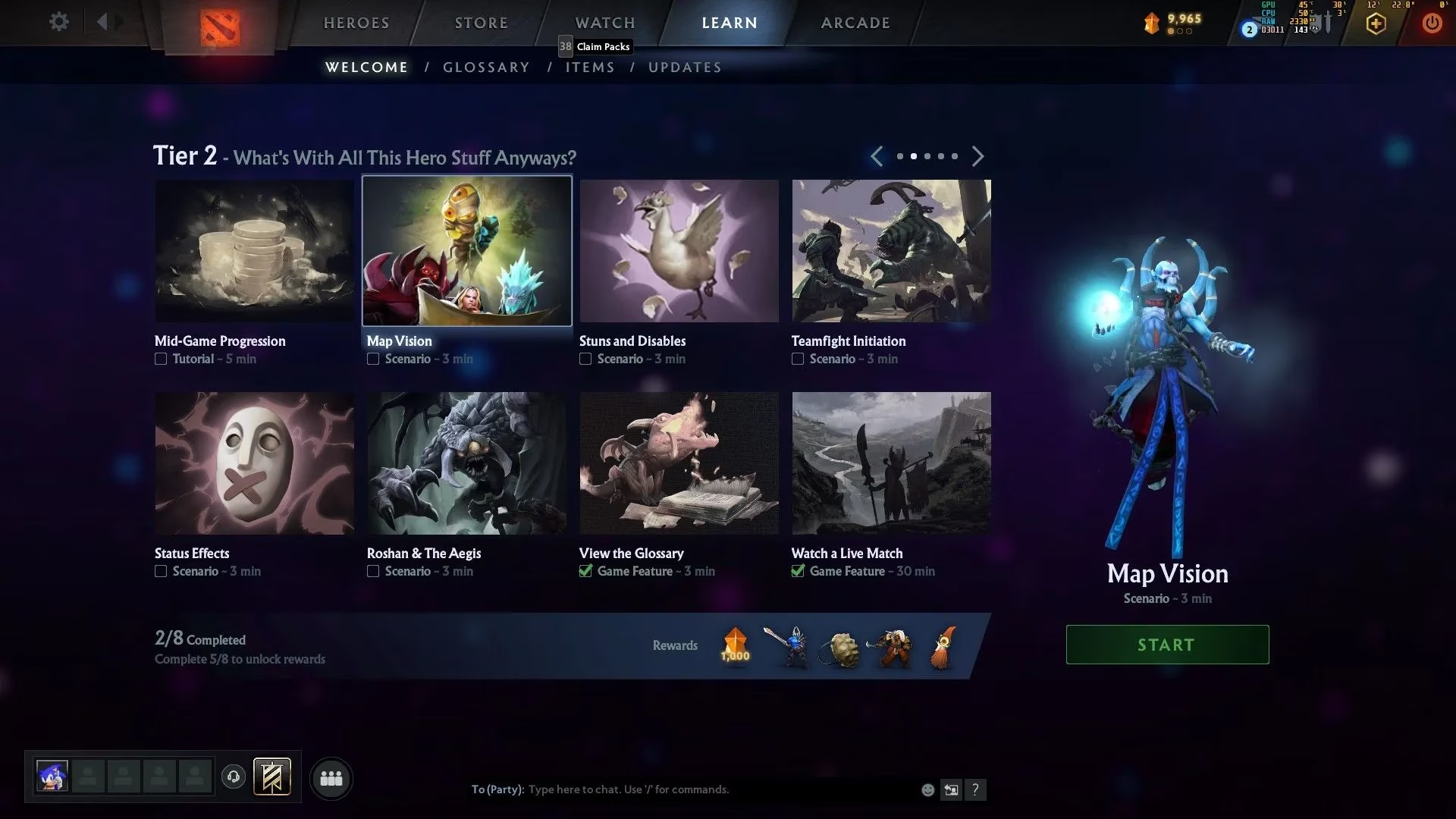
One of the best resources I found early on was actually built into the game itself. For any new player looking to understand this, I can't recommend the Map Vision tutorial under the Learn tab enough. It provides a fantastic, hands-on foundation that text guides alone cannot.
Beyond the Basics: The Philosophy of Warding
Over time, my warding evolved from following a checklist to embodying a philosophy. It's about asking questions:
-
What is the enemy's next objective? Are they looking to gank our farming Anti-Mage? A deep ward in their jungle might spot the movement. Are they grouping for a push? Vision around that lane is critical.
-
What are our next objectives? If we want to take Roshan in two minutes, I start securing the area with sentries and observers now, not when Roshan is already being attacked.
-
What is missing? I constantly look at the minimap. Large areas of darkness are vulnerabilities. Filling them with vision isn't just helpful; it's proactive threat prevention.
The convenience of the courier cannot be overstated. I don't need to trek back to base every time I need wards. A quick command, and my trusty courier delivers them to me on the front lines, allowing for seamless vision control without sacrificing map presence.
Warding transformed my Dota 2 experience. It made me a more patient, strategic, and team-oriented player. That glowing ward is more than an item; it's a statement. It says, "I see you. I know your plans. And I am here to counter them." In the complex, beautiful chaos of a Dota 2 match, that knowledge is the greatest power of all. It turns reaction into action, and guesswork into certainty. And in 2026, that's what separates a player from a strategist.