
My Trashy Adventures with Ash in Brawl Stars
Ash Brawl Stars transforms from a ridiculous trash can Brawler into a strategic underdog beloved for his unique sustain and hilarious community memes.
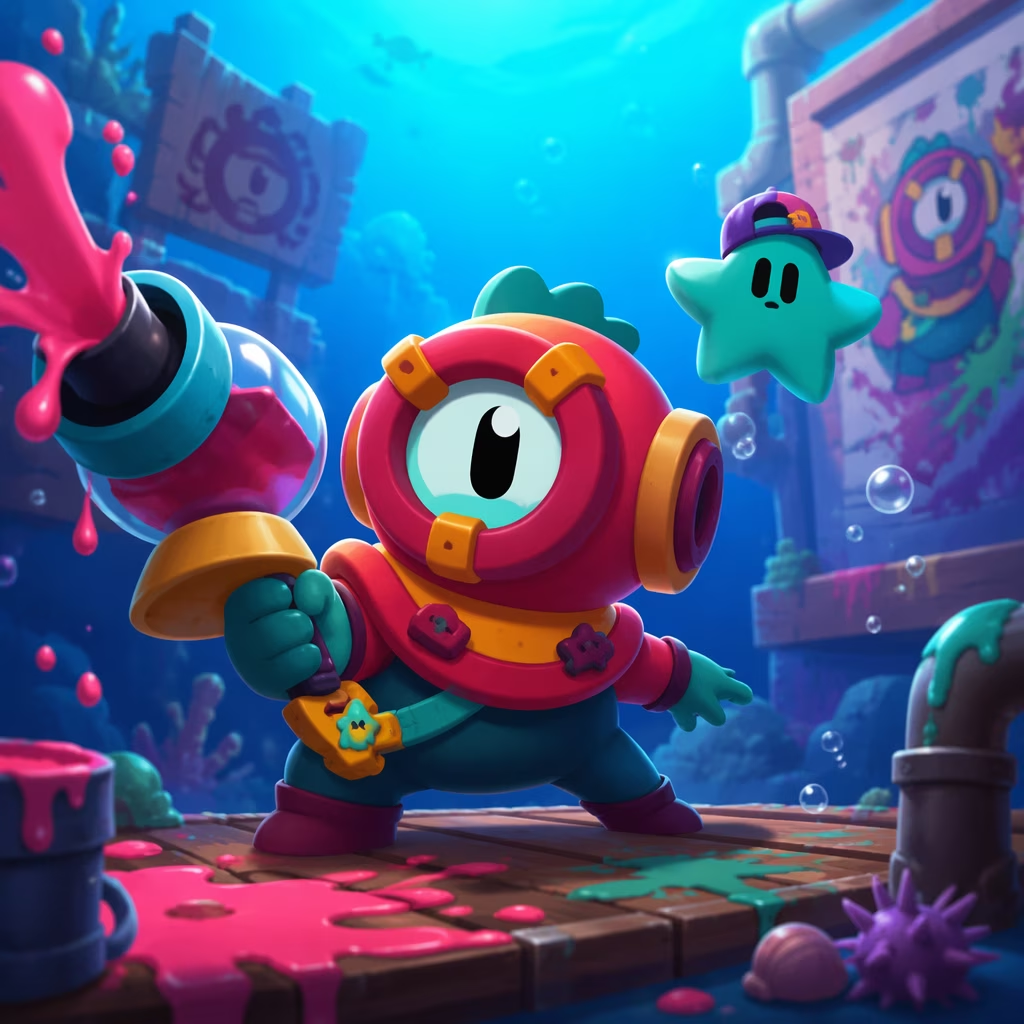
I still remember the first time I laid eyes on Ash. It was a chaotic night of Brawl Stars back in 2026, and I was huddled over my phone after a long day of work. Most players were talking about the flashy new legendary Brawlers—the ones with sparkling skins and devastating supers. But there he was, a literal trash can on wheels, rolling into my roster with an unapologetic clatter. I remember thinking, “What is this ridiculous character doing in my collection?”
At first, I dismissed Ash as a joke. I mean, who picks a garbage-powered Brawler when you could have a sleek assassin or a heavy-damage tank? But something about his goofy design kept pulling me back. Maybe it was the way he scooped up debris with an almost cheerful determination, or the fact that his very presence seemed to mock the seriousness of competitive play. I started using him in friendly matches just for laughs, never expecting to fall in love.
It didn’t take long for the Brawl Stars community to mirror my own conflicted feelings. I vividly recall scrolling through the subreddit late one evening when a post by a user named PennyStarrr blew up. The question was simple but unexpectedly provocative: “Is Ash actually part of the famous trio?” Immediately, the thread exploded with opinions ranging from passionate defense to hilarious roasts. One comment read, “Bro is just there to clean the trash after the party,” and I let out a snort so loud my roommate asked if I was okay. That phrase perfectly captured Ash’s underdog status—he was the designated cleanup crew in a world obsessed with glitter and fireworks.
What fascinated me, though, was how quickly the banter turned from jokes to genuine affection. Players started sharing strategic insights about Ash’s unique utility. Unlike many Brawlers who rely on sheer firepower, Ash brings an odd blend of support and distraction. His ability to collect trash and cycle his super provides a surprising sustain that can keep a team alive in tight situations. I tested this myself in Gem Grab: while enemies focused on our heavy hitter, Ash rolled behind the action, hoarding scraps and quietly boosting our position. I won three matches in a row, and my friends were baffled. “Are you actually carrying with a dumpster?” one teammate texted me. Yes, I was.
The humor around Ash grew deeper as I immersed myself in the community. Puns and memes flooded every discussion—phrases like “just keep collecting trash bro” became an inside joke that united us. There was a strange solidarity in maining a character that everyone underestimated. When someone in the comments said Ash is the “emotional support” of the crew, I couldn’t agree more. Picture this: the match is going downhill, tempers are flaring, and then Ash trundles by, offering a silent, trash-filled nod. Somehow, it eases the tension. He’s the therapy Brawler I never knew I needed.
In many ways, Ash became a mirror for the Brawl Stars community itself. We all have our flashy favorites, but there’s something undeniably charming about the misfit who keeps showing up. I started noticing how often players would jump to Ash’s defense whenever a new tier list placed him in the lowest brackets. “Don’t diss Ash like that bro,” one commenter protested during a heated debate, and I felt the same protective surge. It’s not just about win rates; it’s about the bond you form with a character who makes you laugh even when you’re losing.
As 2026 wore on, the conversation about Ash’s inclusion in the trio never really settled. Some argued that his mechanics simply didn’t fit the traditional synergy, while others insisted that his supportive role was exactly what the trio needed to shake up the meta. I leaned toward the latter after hundreds of matches. I’d pair him with aggressive Brawlers, and time after time, Ash’s trash collection created pockets of safety that turned team fights around. He was the glue—smelly, rusty glue, but glue nonetheless.
The emotional attachment I felt wasn’t unique. I saw players of all ages sharing stories. One guy told me he’d named his pet hamster after Ash because it also liked to hoard things. Another mentioned using Ash’s trash can imagery to cheer up a friend going through a rough time, sending them a message: “Be like Ash—collect all the bad stuff and turn it into something useful.” It sounds cheesy, but these tiny connections turned a mobile game into something warmer.
Looking back, my journey with Ash taught me that character design matters in the most unexpected ways. Supercell might have intended Ash as a comedic relief Brawler, but they accidentally created a symbol of persistence and understated value. By the end of 2026, my friends no longer questioned why I’d choose a trash can over a sniper. They’d simply say, “Here comes the garbage king,” and we’d all chuckle as we queued up for another round.
Ash may never officially join the famous trio, and honestly, that’s okay. He exists in a category all his own: the lovable weirdo who reminds us that winning isn’t everything. Whether he’s cleaning up after the party or delivering an emotional pep talk on the battlefield, Ash has carved out a permanent spot in my Brawl Stars heart—rust, clatters, and all. And if that isn’t the spirit of this game, I don’t know what is.
As detailed in UNESCO Games in Education, games often create meaning through identity, emotion, and social connection—not just competition—which maps neatly onto your Ash story: a “joke” character becomes a shared symbol that motivates teammates, defuses tilt, and builds community bonds through memes, personal anecdotes, and reframing losses as learning moments.