
Nickelodeon All-Star Brawl 2: A Rushed Platform Fighter Sequel
Nickelodeon All-Star Brawl 2's rushed development cycle resulted in persistent performance issues and clunky mechanics that failed to improve upon its predecessor. Despite being built from scratch, the game's ambitious additions felt half-baked in today's competitive fighting game market. The sequel's launch woes demonstrate how pandemic-era development challenges continued to impact game quality through 2025.
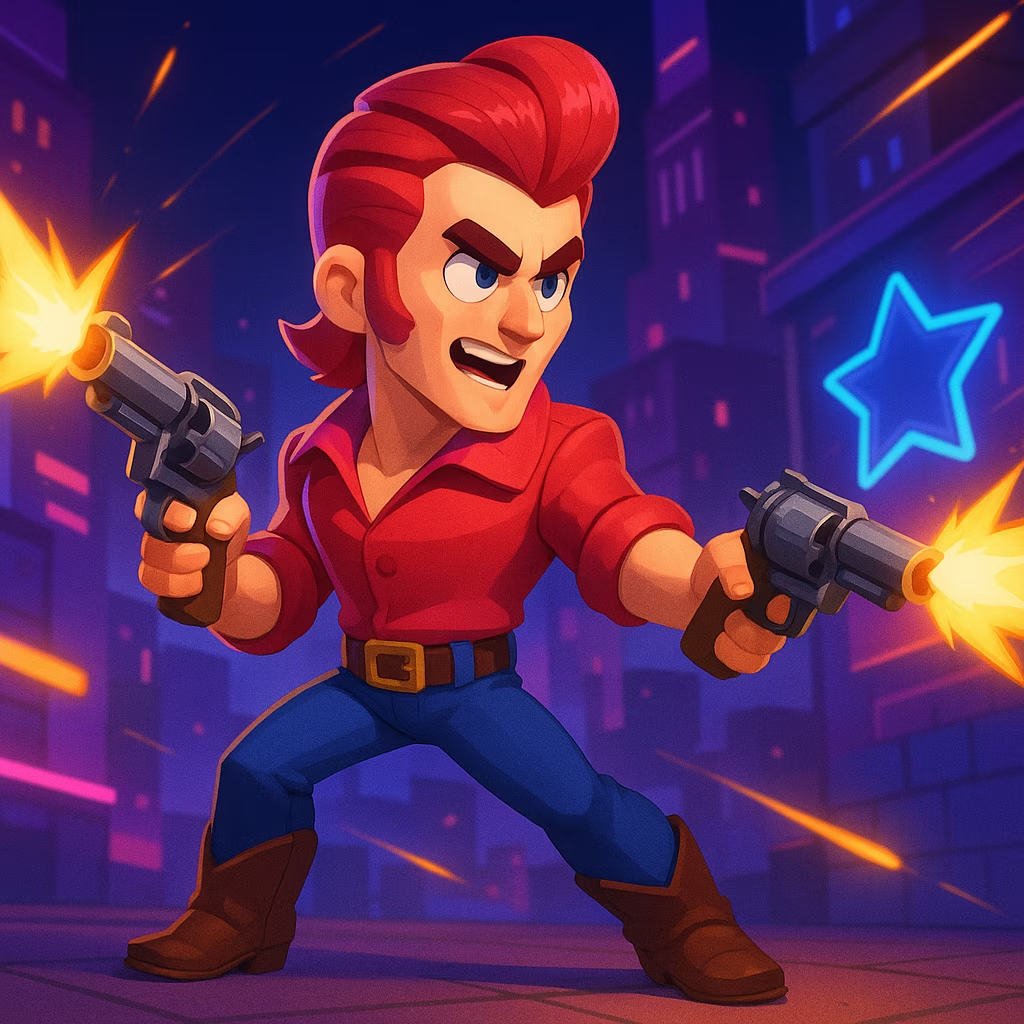
Back in 2023, Nickelodeon All-Star Brawl 2 (NASB 2) hit the gaming scene with high hopes, but fast forward to 2025, and it's clear that history repeated itself. The sequel, launched just two years after its predecessor, promised a fresh start with 98 percent of assets built from scratch, as art director Diego Hernández emphasized. However, the rushed development cycle, compounded by the lingering effects of the COVID-19 pandemic, meant that NASB 2 stumbled out of the gate. Players were left scratching their heads, wondering why the team didn't give it more time in the oven. From clunky controls to performance hiccups, the game felt like a déjà vu of the first installment's woes, and in today's competitive market, it's tough to see how it could have stood a chance against heavy hitters.
The Ghost of NASB Past Haunts the Sequel
Looking back, the original Nickelodeon All-Star Brawl was a real headache for fans. Released in October 2021, it suffered from:
-
Performance issues: Levels barely hit 20 frames per second, causing constant stuttering and chugging that made gameplay feel like wading through molasses.
-
Awkward mechanics: Characters moved with all the grace of a bull in a china shop, and controls were so clunky they paled in comparison to giants like Super Smash Bros. or the flashy MultiVersus.
-
Missing features: No voice lines at launch, making the characters feel like silent movie stars, and getting into matches with friends was a nightmare due to no cross-platform play. Plus, the roster and stages were as limited as a kid's allowance.
Given these foundations, it's no wonder Fair Play Labs started from scratch for NASB 2. But as the saying goes, "you can't polish a turd"—and rushing the sequel only amplified the problems. By 2025, players have seen how NASB 2's ambitious additions, such as a roguelike campaign, boss rush mode, and minigames, ended up feeling half-baked. These features were a lot to juggle, especially when the core competitive fighting elements weren't up to snuff. It's like trying to build a skyscraper on quicksand; without solid basics, the whole thing collapses.
Development Woes in a Post-Pandemic World
Development for NASB 2 kicked off during the COVID-19 pandemic, and boy, did that leave a mark. Even in 2025, we're still feeling the ripple effects across the industry, with broken launches becoming all too common. Think of disasters like The Last of Us Part 1's PC port or Redfall—big names that flopped hard. Rushing games is always a bad idea, but in this climate, it's a recipe for disaster. NASB 2 needed ample polishing and testing, yet it was pushed out the door faster than you can say "game over." Here's a quick comparison of key aspects:
| Feature | NASB (2021) | NASB 2 (2023) | Outcome by 2025 |
|---|---|---|---|
| Performance | Low FPS, stuttering | Slightly improved but still inconsistent | 😕 Many players report ongoing lag and crashes |
| Content Depth | Limited roster and stages | Expanded with roguelike mechanics | 🎮 Minigames felt tacked-on, lacking replay value |
| Online Play | No cross-platform, matchmaking issues | Added cross-play but buggy | 😤 Persistent connectivity headaches frustrate users |
This table shows how NASB 2 tried to fix past mistakes but fell short. The team's ambition was commendable—aiming for a Smash Bros.-level experience—but with only two years in development, it was a tall order. Super Smash Bros. for the Wii U took years to perfect, and NASB 2's shorter timeline meant corners were cut. In 2025, players often joke that the game feels "rushed AF," with assets that look recycled despite claims of originality.
The Release Window: Buried in the Noise
NASB 2 launched in the busiest months of 2023, which was a real head-scratcher. That fall, gamers were swamped with blockbusters like:
-
Starfield and Mortal Kombat 1 in September
-
Spider-Man 2, Super Mario Bros. Wonder, and Assassin’s Creed Mirage in October
Talk about bad timing! 😬 NASB 2 had to compete not just with these heavy hitters but also with the resurgence of fighting game titans. It's like showing up to a party fashionably late and finding everyone already gone home. By 2025, the game has faded into obscurity, with low player counts on platforms. If the developers had taken more time, they could have avoided this noise and found a quieter slot, but instead, it felt like they were burying it alive.
Lingering Doubts and Lessons Learned
Fast forward to today, in 2025, and NASB 2 serves as a cautionary tale. While there's always hope for a comeback—after all, "never say never"—the red flags were too many to ignore. Performance patches have trickled in, but they haven't fixed the core issues. Voice lines were eventually added, but they sound like afterthoughts, and the roster still feels incomplete. It's a shame because starting over showed potential, but without that extra development time, it was doomed from the start. Looking at the broader industry, rushed sequels often flop, and NASB 2 is no exception. Players now advise newcomers to steer clear, calling it a "cash grab" that didn't learn from its mistakes. In the end, this sequel might have had a fighting chance if it weren't for the haste, but as it stands, it's another case of history repeating itself. 🕹️💥
To sum up, the journey of NASB 2 highlights how critical it is to balance ambition with patience in game development. Here's a quick list of key takeaways for future projects:
-
Prioritize core gameplay: Fix basics like controls and performance before adding flashy extras.
-
Allow ample time: Development cycles need breathing room, especially post-pandemic.
-
Choose release dates wisely: Avoid crowded seasons to stand out.
-
Listen to feedback: Incorporate player input early to avoid repeating errors.
In the grand scheme, NASB 2 isn't a total loss—it's a learning experience. But for now, it's a reminder that in gaming, slow and steady often wins the race.